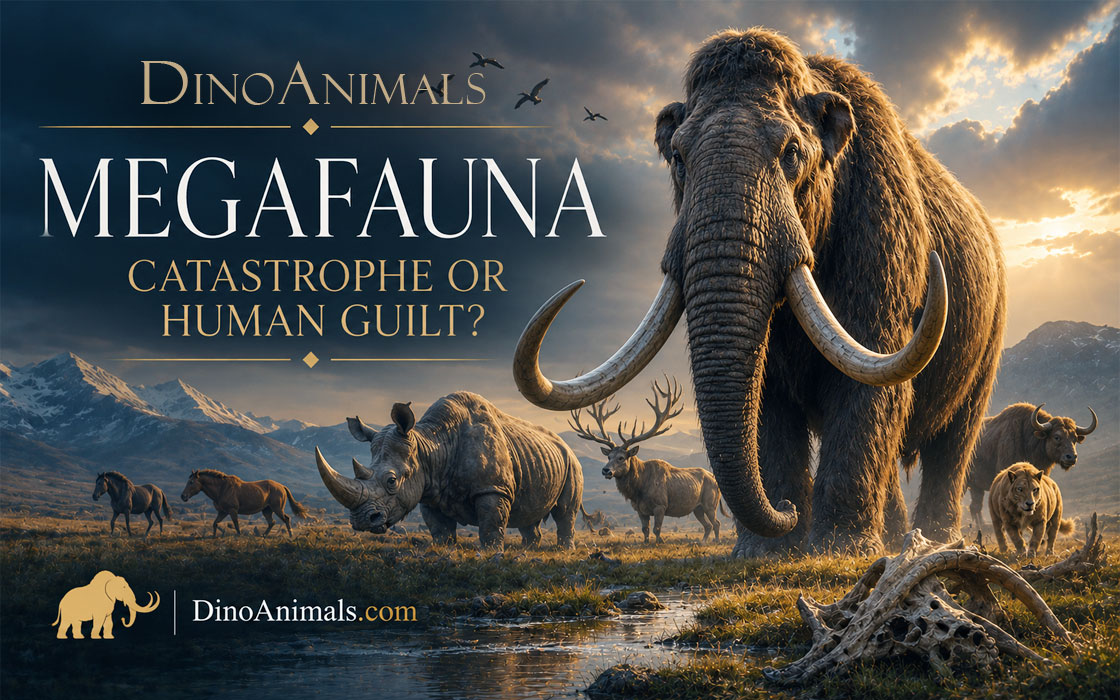
Megafauna – Catastrophe or Human Guilt?
The Truth About the Extinction of the Largest Land Mammals

Humans vs. Nature – The Drama of the Pleistocene
Did Megafauna Die Out for Good?
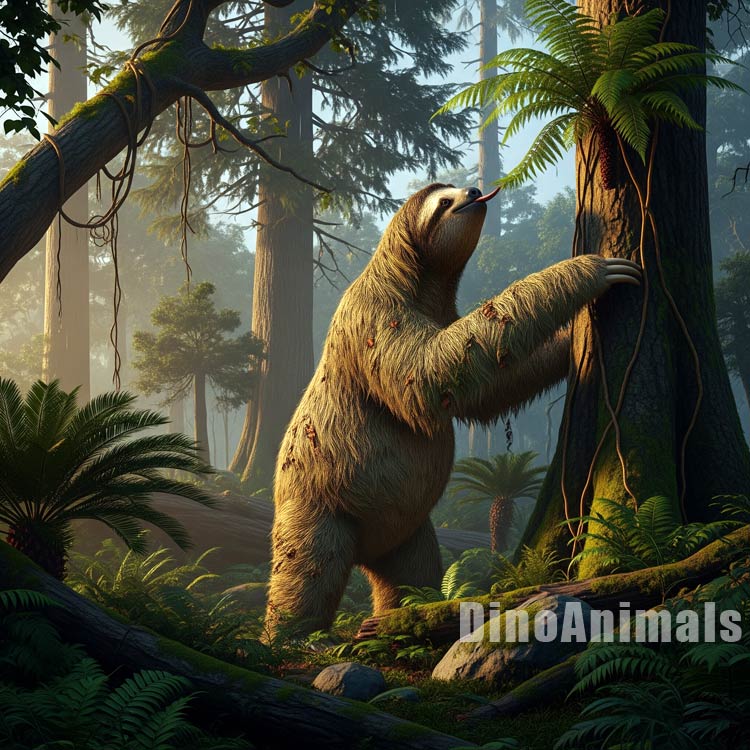
Ten thousand years ago, the world looked different – and not just because of the glaciers. Sloths the size of cars roamed the continents, alongside armored armadillos covered in spikes, marsupials larger than today’s bears, and extinct flightless birds growing up to 3 meters (9.8 feet) in height, such as the elephant bird (Aepyornis maximus) or the Australian Dromornis.
Most of them disappeared. But was it forever?
The Earth went through a climatic revolution, and later – encountering further traumatic experiences – a new player appeared: humans. Did these two factors truly end the era of large land mammals, or perhaps they merely suspended it?
What if… the world is preparing for the return of megafauna once again?
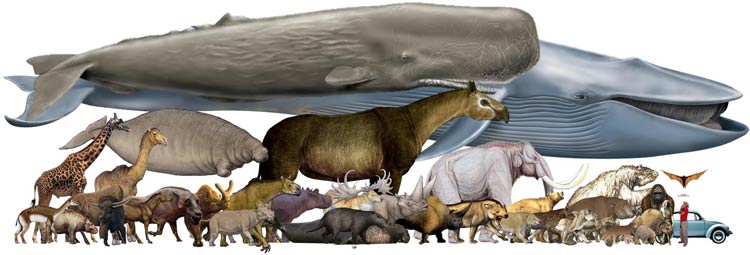
Modern elephants, giraffes, and whales – they not only survived the great extinction but still rank among the largest organisms in the history of life on Earth. In fact, some of them – like the blue whale (Balaenoptera musculus) – have never been this large before. Is this an exception… or perhaps a preview of what is to come?
Chapter 1: The Era of Giants or Human Projection?
We know that the Pleistocene is the era of megafauna. But do we truly understand what that means?
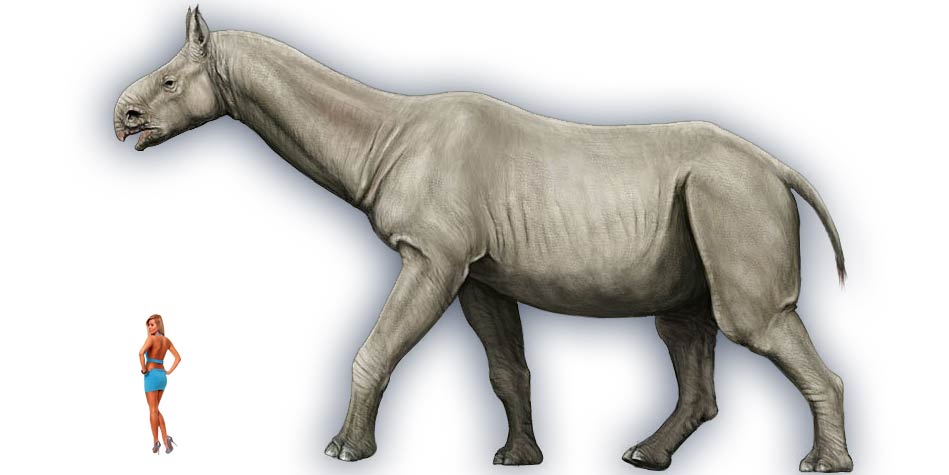
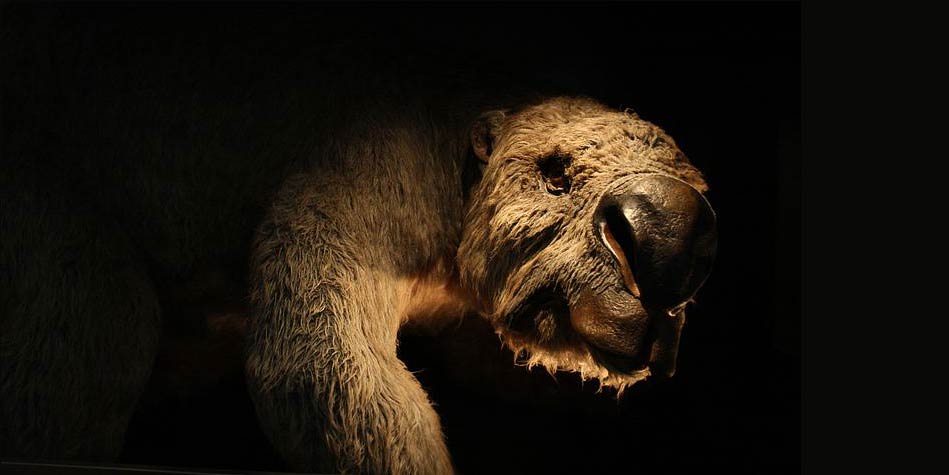
When we hear the word “megafauna,” we envision mammoths (Mammuthus primigenius), paraceratheres (formerly known as indricotheres), saber-toothed cats (Smilodon fatalis), short-faced bears, or giant ground sloths (Megatherium americanum). These images are so vivid that they almost live in pop culture – as if these creatures still existed somewhere, hidden in remote corners of Siberia or the Andes. But behind these images lies a question: was the Pleistocene fauna truly so “uniquely massive,” or do we – the humans of the 21st century – simply view it through the magnifying glass of nostalgia?
The definition of megafauna is not precise
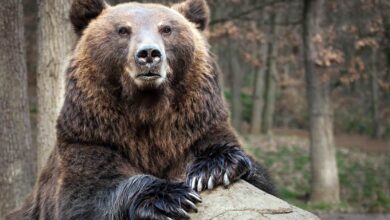
For scientists, it is any animal exceeding 44 kg (97 lbs); for others, only those exceeding 1 metric ton (1.1 short tons / 2,204 lbs). Besides, today’s African buffalo (Syncerus caffer) also fits the definition of megafauna. Just like the Asian, African forest, and African bush elephants, various species of rhinoceroses, or the brown bear.
So perhaps we haven’t lost megafauna… we have just grown used to it?
Or perhaps the problem lies elsewhere – not in the animals themselves, but in the idea of a lost harmony that we project onto the past? When we talk about mammoths, ground sloths, and diprotodons, we often add the phrases: “they lived in harmony with nature,” “they did not know humans,” or “they were victims of climate change and human expansion.” It sounds almost like a fairy tale that ends badly only because… we appear.
But are we really the bad guys?
From a paleoecological standpoint – not necessarily. There are regions where megafauna disappeared before humans arrived, and there are also places where humans coexisted with it for thousands of years. An example? Australia. The original inhabitants of this continent could have encountered the last representatives of Diprotodon optatum, the largest marsupial in history, but also the predatory Thylacoleo carnifex, known as the marsupial lion. In both cases, we lack evidence of mass, rapid extermination.
Could it be, then, that not everything was so black and white?
Chapter 2: When Does the Pleistocene End and the Anthropocene Begin?
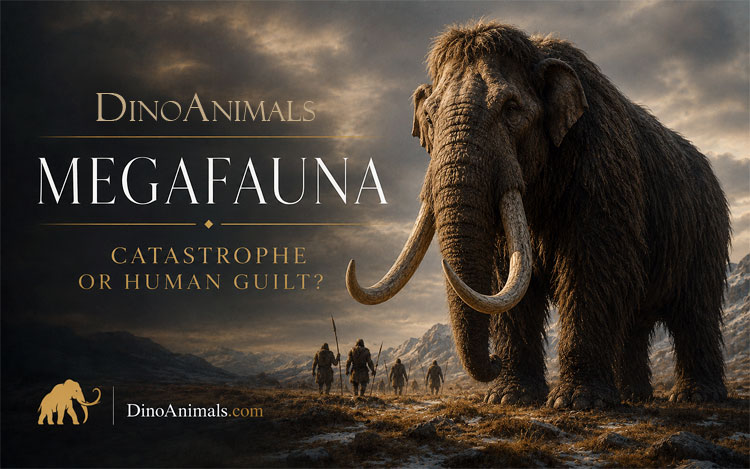
The Pleistocene ends in textbooks about 11,700 years ago. But no one announced it out loud back then. There was no final mammoth beating a drum in Siberia, nor a ground sloth waving its paw in farewell.
What is a hard boundary between epochs for geologists was rather a long, grueling transition for life on Earth. Glaciers gradually retreating from the Northern Hemisphere, rising sea levels, shifting vegetation, and in the background… a new predator. Not so much bloodthirsty as organized. Us.



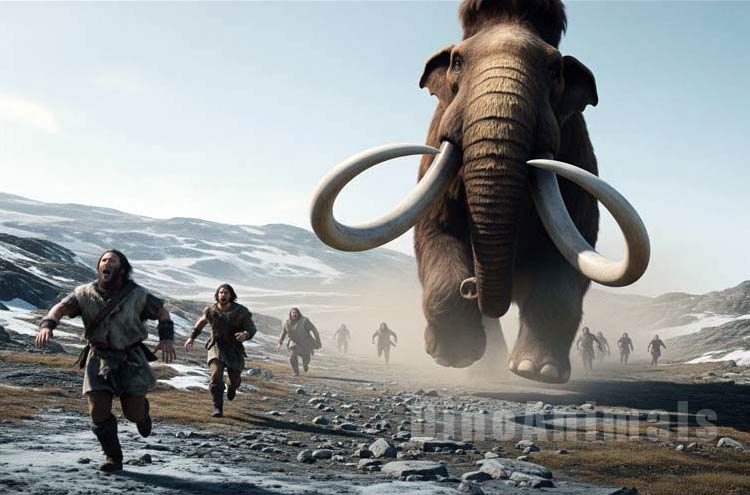
Homo sapiens did not appear suddenly, and we were not the only humans on Earth. Long after our expansion began, Neanderthals (Homo neanderthalensis) survived in Europe, Denisovans in Asia, and even the mysterious Homo floresiensis on the island of Flores. But only one of these species harnessed fire, developed language, manufactured advanced weaponry, and possessed an imagination – a toolkit that alters the balance of power much faster than climate shifts.
When, then, does the Anthropocene – the age of humans – actually begin?
- Is it when early humans first began modifying landscapes with fire?
- Is it when they started altering ecosystems by selectively eliminating large herbivores and apex predators?
- Or perhaps only with the advent of the Industrial Revolution, when our impact became global and visible in the chemistry of geological sediments?
There is no single answer. But one thing is certain – the Anthropocene is not an era of peace with nature. It is an era of dominance.
The last mammoths on Earth – the population from Wrangel Island – went extinct about 4,000 years ago. This means that while the Egyptians were building the pyramids, shaggy ice-age silhouettes were still walking on a remote, cold island. Is that still the Pleistocene, or already the Anthropocene?
On the other hand, some scientists, such as Paul Crutzen and Eugene Stoermer, suggest that the true Anthropocene began around 1950 – with the appearance of radioactive isotopes from nuclear weapons testing. For the Earth, this is an indelible signature – a line in the strata that geologists will see for millions of years. A somewhat grim signature of humanity.
Chapter 3: The Myth of Harmony
Did humans truly destroy everything larger than themselves?
Before cities, asphalt, and touchscreens, humans were supposedly living “in harmony with nature.” This image feeds modern nostalgia – a naked hunter-gatherer sharing space with mammoths, aurochs, and cave bears, consuming only what was “sustainable.” The problem is that archaeological and paleoecological data indicate something entirely different.
Harmonious but Effective
One only needs to look at Australia. Shortly after the appearance of Homo sapiens – about 50,000 years ago – nearly all of the continent’s megafauna disappeared: large marsupials like Diprotodon, giant flightless dromornithids (Genyornis newtoni), massive snakes, and lizards. The temporal coincidence is far too precise to blame everything solely on climate change.
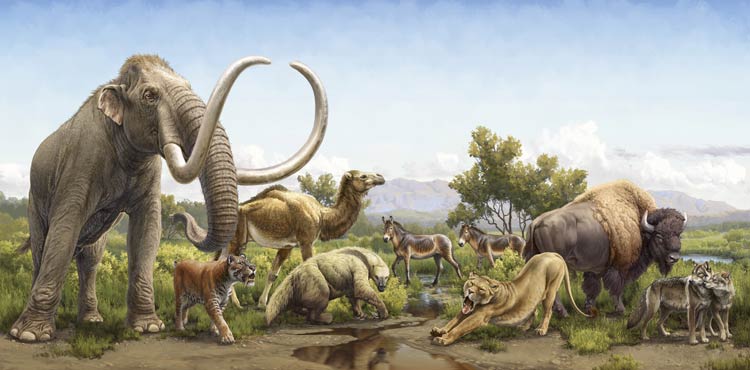
It was a similar story in North America. The extinction of horses, camelids, American mastodons (Mammut americanum), ground sloths, and Smilodon fatalis occurred shortly after humans arrived from Asia across the Bering Land Bridge.
It was not that Homo sapiens was a ruthless killer – pressure alone was enough: targeting juvenile individuals, disrupting reproductive cycles, and degrading habitats. Megafaunal ecosystems did not know such hunters. They had no “software” to cope with them.
“Large Did Not Mean Indestructible”
To this day, we live in a degraded world – degraded not by industry, but by a highly effective predator that mastered the art of fire, cooperation, and precise planning. Did humans destroy everything larger than themselves?
No. But anything larger than a human and slower to reproduce was in serious trouble.
Marsupial lions (Thylacoleo carnifex) disappeared – marsupial apex predators from Australia, comparable in size and strength to a leopard or small lioness. Moa (Dinornithiformes) from New Zealand disappeared – birds as tall as a giraffe’s neck. Even the elephant bird (Aepyornis maximus), a giant ratite from Madagascar, vanished.
In some cases, such as on the island of Mauritius, the extinction process took place right before the eyes of the first European explorers. The dodo (Raphus cucullatus) knew no fear of humans because it did not have to – until it was too late.
The myth of harmony is beautiful but untrue. Humans were – and are – an element of nature, but we were never its equal partner. From the very beginning, we had the ambition to play the leading role.
In the next chapter, we will examine whether the mass extinction of megafauna was inevitable, or if it was merely a test – one that we failed.
Chapter 4: Was It Inevitable?
Alternatives we did not choose
From the perspective of the 21st century, it is easy to shrug our shoulders and say: “that’s just the way things go.” The climate was changing, ice sheets were melting, and megafauna was fading into oblivion. But could nothing truly have been done differently? Was Homo sapiens, with all our cleverness and adaptability, merely a passive participant in a natural script?
The Tipping Point – The Culture of Fire
One of the greatest driving forces of change was… the campfire. In Australia, Africa, and the Americas, humans began transforming landscapes through systematic anthropogenic burning, creating spaces that were more hospitable to themselves but less hospitable to large, specialized herbivores.
Think about it: a forest transforms into a savanna. Shade disappears, food for browsers vanishes, and grasses emerge – followed by an increase in the populations of grazing game species. It all seems reasonable… until the large animals disappear.
It was not a matter of malice, but a lack of long-term perspective. No one back then was planning environmental conservation. There were no reserves, and concepts like “ecological balance” or “population restoration” did not exist. The goal was to survive – and to make the best possible use of available resources.
Unwritten Scenarios
Was there a chance for an alternative path of development – a world where humans share the planet with rhinoceros-sized ground sloths, moas stroll across the New Zealand lowlands, and Deinosuchus patrols the swamps of Louisiana?
Theoretically, yes. If human expansion had been slower, more dispersed, and less reliant on fire and meat, some ecosystems might have survived (except for Deinosuchus, which belonged to the Late Cretaceous and went extinct millions of years earlier). There is data indicating that small populations of megafauna survived longer in isolated areas – such as the dwarf woolly mammoths (Mammuthus primigenius) on Wrangel Island or Diprotodon (Diprotodon optatum) in the hard-to-reach parts of the Australian outback.
But such cases were too few and lasted for too short a time. Humans entered, observed, adapted… and claimed the space. Not out of cruelty, but out of efficiency.
Homo sapiens – The Ideal Ecologist or a Biological Catastrophe?
Some voices – including scientific ones – claim that humans are the most destructive species in Earth’s history, comparable to an asteroid impact or a supervolcano eruption. Others respond that it is a natural consequence of intelligence and survival strategies.
The Truth Lies in the Middle
Humans were not monsters. We were just too effective as players in a game whose rules we did not understand. If we had understood them – perhaps many of these creatures would still live in the shadow of our homes, rather than in the shadow of museum display cases. The catch is that even today, most people do not comprehend this, and consciously or unconsciously, they reject and ignore the facts.
In the next chapter, we will look at the myth of the great resurrection: whether we can truly “bring back” what has disappeared – and whether we want to know what that entails.
Chapter 5: De-extinction
A dream, a myth, or a ticking time bomb?
Until recently, it sounded like a line from a B-movie script: “Scientists resurrect extinct animals!” – and we instantly envision a herd of woolly mammoths (Mammuthus primigenius) traversing the Siberian tundra, with a cave bear (Ursus spelaeus) somewhere in the background and a geneticist holding an iPad nearby. Today, this is no longer pure fantasy. It is a tangible research roadmap funded by well-capitalized startups and foundations.
Genetic Engineering vs. Evolution
CRISPR-Cas9 is not kryptonite; it is the tool that changed the rules of the game. It grants us the ability to perform precise gene editing, including the reconstruction of genomic fragments of extinct species using DNA material extracted from bones, teeth, or hides preserved in the permafrost.
But this is not a resurrection from the dead – it is assembling Frankenstein’s monster. A mammoth engineered from the genome of an Asian elephant (Elephas maximus) is not a true mammoth. It is a chimera – a creature inspired by a mammoth but belonging to no known lineage, completely devoid of ancestors and ecological context.
A Problem Far Greater Than Genes
Even assuming we succeed in creating a healthy animal – what comes next? Do we have an appropriate environment in which to release it? The tundra of today is not the same tundra that existed 10,000 years ago. The mammoth steppe is gone, and along with it, the specific vegetation, soil microflora, and even the tundra snowpack dynamics that were once maintained by heavy herbivores.
It is like returning from a time-travel journey only to find your home… has been demolished.
Furthermore, there is a total absence of social culture. These chimeras cannot learn from mothers, they have no herd, and they do not know species-specific rituals. They are stranded in time, like ghosts from the future.
An Ecological Moral Dilemma
On one hand – we can. On the other – should we? De-extinction consumes millions of dollars that could otherwise be allocated to the conservation of genuinely endangered species.
Is it worth attempting to bring back Thylacoleo carnifex when today we are failing to save the Tasmanian devil (Sarcophilus harrisii) from the devastating effects of Devil Facial Tumor Disease (DFTD)?
And what if we bring back something we do not understand? Something that has no place in the modern biosphere, which might disrupt a fragile balance and… vanish a second time – even faster and more painfully.
Hope or Scientific Hubris?
There is no shortage of optimists. They view de-extinction as a form of penance for our past mistakes. “Since we helped them disappear, perhaps we have an obligation to help them return.” But this is not a straightforward path.
This is not resuscitation. This is creating something entirely new, often for our own curiosity, pride, or marketing. And like any attempt at playing God – it can have unforeseen consequences.
In the next chapter, we will examine the cases that are already being used today as “proof of success” for de-extinction. But are they truly what they are claimed to be?
Chapter 6: Clones, Flawed Experiments, and Media Spectacles
In the history of de-extinction, there are moments of triumph, but also long shadows of failure. The cloning of extinct species did not begin in science fiction laboratories, but rather… in a sheepfold. When Dolly – the first mammal cloned from a somatic cell – was born in 1996, the world held its breath. And scientists began dreaming of larger clones.
The Last Breath of the Bucardo
The year is 2003. Spain. A clone of a female Pyrenean ibex (Capra pyrenaica pyrenaica), also known as the bucardo, which had gone extinct just three years prior, is hailed as the first case of “de-extinction.” But the euphoria lasted for a mere 7 minutes.
The newborn kid suffered from a severe physical lung defect and did not survive.
This was not just a biological tragedy. It was the first time in history that a species went extinct twice.
The Land of Tasmanian Illusions
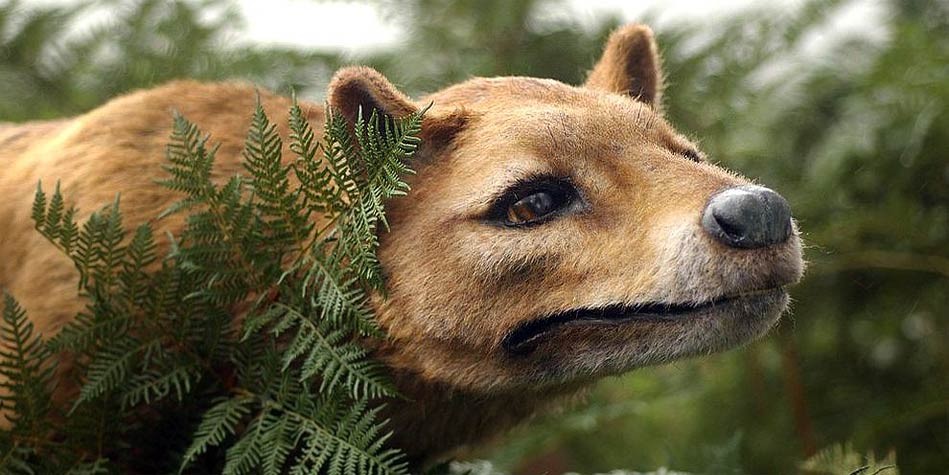
Australia – a place where the wonders of evolution met the catastrophe of colonization. Here, the most media-sensationalized project has become the plan to bring back the marsupial lion (Thylacoleo carnifex) and the thylacine (Thylacinus cynocephalus), commonly known as the Tasmanian tiger. The latter officially went extinct in 1936 – yet archival footage, alleged sightings, and sensationalized “tracks” continue to ignite the imagination.
Startups and research institutes announce that the thylacine will return by 2030. The problem? The genome remains heavily fragmented, the available genetic material is degraded, and the total lack of suitable surrogate mothers or knowledge of the animal’s natural ethology (behavioral biology) makes the project more of a media fairy tale than a realistic opportunity.
Elephants That Were Supposed to Be Mammoths
The company Colossal Biosciences raises funds, showcases animations, and promises the “mammothification” of elephants within a decade. But even the company’s CEO admits: “These will not be mammoths. They will be elephants with mammoth traits.” And in scientific nomenclature, that is not de-extinction; it is conceptual bioengineering. Art for art’s sake. And sometimes – for the investors.
Media Praise, Scientific Failure
Every “resurrected” species becomes a major news headline. But the costs are rarely discussed – the dozens of miscarried embryos, stillborn newborns, and severe congenital deformations.
People do not talk about how many of these attempts are essentially highly invasive animal testing experiments where creatures suffer – and never stood a chance of survival in the first place (did you ever watch The Fly II?). And when it fails? It vanishes from the newspaper headlines. And from the research grants.
In practice, de-extinction resembles a patchwork of myths, ambitions, and… genetic improvisation. In the next chapter, we will examine the real dangers if these “experiments” ever leave the laboratory walls.
Chapter 7: What Could Go Wrong?
Scenarios on the borderline between science fiction and environmental impact reports
Let us imagine that the project succeeds. A healthy individual of an extinct species hatches or is born in the laboratory. A success? Not necessarily. The real problems only begin when we decide to… release it from its cage.
The Ecosystem Does Not Remember
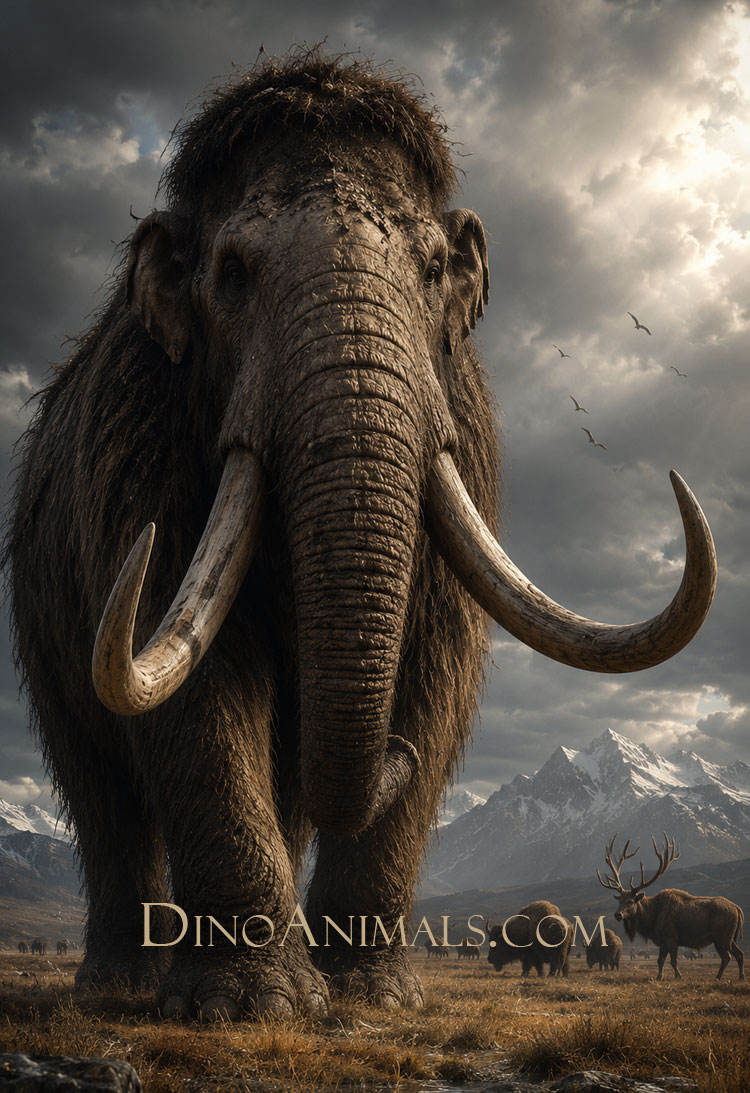
A resurrected species is not a jigsaw puzzle piece that always fits back where it was taken from. Ecosystems change – dynamically and irreversibly. A woolly mammoth (Mammuthus primigenius) released in Siberia today will no longer find its ice age. In the best-case scenario, it will become a major tourist attraction. In the worst-case scenario, it will become an invasive species with no natural predators, destroying local flora and disrupting trophic cascades (food webs).
Animals Without Instinct
Genetics is not everything. Where is the teacher of life? Where is the mother mammoth to teach the calf how to avoid bogs and predators, or how to forage in the freezing taiga-tundra transition zone? De-extinction creates orphans. Biological anomalies that exist, but do not know how to be.
What if they lack social instincts entirely? What if they fail to form bonds? They may never learn to avoid humans – which could culminate in another extinction, this time under the wheels of an all-terrain vehicle (ATV) or due to a modern pathogen like Highly Pathogenic Avian Influenza (HPAI) or a novel coronavirus, against which they possess absolutely no immunity.
Viruses from the Past and the Cost of Conservation
Viruses from the Past
A frozen tissue sample from the Siberian permafrost does not necessarily mean everything inside it is dead. Along with the mammoth, we might inadvertently “resurrect” something far more insidious – ancient viruses and bacteria against which modern organisms have no natural immunity or vaccines. Does it sound like a B-movie thriller plot? Unfortunately, this is already a subject of serious scientific investigation, as some of these prehistoric microbes still exhibit biological activity and infectivity after lying dormant for tens of thousands of years.
At the Cost of Conserving What Is Still Alive
This might represent the ultimate irony of the entire endeavor. While Bornean orangutans (Pongo pygmaeus), western gorillas (Gorilla gorilla), and various species of rhinoceroses (Rhinocerotidae) are sliding toward extinction – species that we still have a realistic chance to save – public attention and financial capital are drifting toward media-sensationalized cloning experiments. De-extinction effectively diverts crucial funding and resources away from real-world habitat protection and wildlife conservation.
De-extinction is not merely a question of “can we?” but rather: “should we?”
And do we truly understand the potential ramifications when the laboratory ceases to function as a biosafety containment unit, and an animal engineered from the past is released into a modern world that no longer has an ecological niche for it?
In the next chapter, we will examine alternative pathways – less flashy, but genuinely effective – offered by modern conservation biology.
Chapter 8: Or Perhaps There is Another Way?
What instead of resurrecting the dead?
Since the return of the woolly mammoth, the passenger pigeon (Ectopistes migratorius), or the thylacine (Thylacinus cynocephalus) carries so many question marks, it is worth asking: are there alternatives? The answer is yes – and they are quite down-to-earth. Both literally and figuratively.
Genetic Conservation
We do not need to bring back entire species. We can preserve the genetic diversity of those that still exist before it is too late. High-throughput DNA sequencing, cryopreservation of semen, oocytes, and embryos – these are not science-fiction experiments, but everyday practices in wildlife conservation centers. And they are highly effective.
Thanks to these methods, it was possible to save the lineage of the Pinta Island tortoise (Chelonoidis niger abingdonii). At least in part – its genetic material survived in hybrid individuals, serving as the foundation for breeding projects aimed at restoring a population closely approximating the original taxon.
Rewilding, or Letting Nature Take Its Course
Instead of dropping genetic chimeras into ecosystems, perhaps we should… grant more space to the animals that are still alive? Rewilding is an ecological management approach that relies on restoring ecological balance by protecting and supporting already existing keystone species – without the use of genetic engineering.
In Europe, rewilding translates to the return of European bison (Bison bonasus), grey wolves (Canis lupus), or Eurasian lynxes (Lynx lynx). In Australia, it involves protecting vulnerable native marsupials from invasive placental predators like feral cats (Felis catus) and red foxes (Vulpes vulpes). The results? Real and measurable. And they do not require biohazard-level containment laboratories.
Editing, Education, and Stewardship
Editing, Not Resurrection
Another viable path is gene editing rather than attempting the wholesale genomic reconstruction of extinct species. We can fortify the immune systems of currently living animals against deadly diseases, decrease their susceptibility to parasites, and increase genetic diversity within bottlenecked, critically small populations. All of this can be achieved using gene-editing toolkits like CRISPR – but without the deceptive pretense of rewinding time.
This technology also offers a profound opportunity to assist plant species – such as engineering native drought-resistant trees capable of surviving rapid climate shifts. In this manner, modern biotechnology does not attempt to simulate the past; instead, it proactively safeguards the future.
Education and Empathy
Sometimes, the most transformative change is brought about not by genetics, but by… a shift in human narrative. Instead of dreaming of Jurassic Park, our focus should be directed toward cultivating empathy for the wild animals that co-exist with us right now. Wildlife conservation begins with conscious awareness. If we can find ourselves deeply moved by the tragic fate of the dodo (Raphus cucullatus), perhaps we can also learn to safeguard the house sparrow (Passer domesticus) or the European hedgehog (Erinaceus europaeus) in our own backyards?
The de-extinction of prehistoric species remains a highly sensationalized media topic, but the genuine future of wildlife conservation is bound to be far less theatrical – and precisely for that reason, highly effective. Perhaps it is time that, instead of trying to play God, we began to excel at our true role… as the caretakers and gardeners of this planet?
In the final chapter, we face an ultimate reflection – are we truly driven by a desire to conserve life, or are we simply trying to appease our own romantic nostalgia for a lost world?

Epilogue
Resurrection for Comfortable Consciences?
Some ideas are so beautiful that they are difficult to ignore – even if they do not work. The de-extinction of species fits perfectly into this category. It sounds like an act of human penance: we, who used to kill, are now saving. We, who used to destroy, are now rebuilding. Yet, beneath the surface lurks something far less noble.
Is it truly about wildlife conservation? Or perhaps it is merely about easing our own collective conscience? It is far easier to showcase a cloned mammoth to the world than to halt global deforestation. It is far easier to secure donations for a spectacular project involving a high-throughput DNA sequencer than to fund a tedious nature reserve or support educational platforms like DinoAnimals that popularize knowledge about the natural world. It is far easier to construct a media-driven narrative than a long-term ecosystem conservation plan.
De-extinction as a Myth
We can therefore view de-extinction as a modern myth – a contemporary iteration of biblical resurrection, told in the language of CRISPR and biobanks. In this myth, humans once again become demiurges. Not to listen to nature, but to correct it, improve it, and restore it on our own terms. A dead thylacine (Thylacinus cynocephalus) does not say, “Leave me alone.” It remains silent. And because of that silence, any narrative can be projected onto it.
What, Then, Should We Do?
Does this imply that we must reject scientific advancement? No. But perhaps it is time to discard the illusion that every technological breakthrough must be instantly deployed, and that every past human mistake must be mechanically “fixed.” Wildlife conservation is not about recreating what once was. It is about preventing what might happen next – if we change nothing.
Perhaps, instead of asking, “Can we resurrect extinct species?” it would be better to ask, “Should we?” And then – “Do we possess the courage to conserve those that still remain?”
It is far less spectacular than seeing a mammoth in Siberia. But it is profoundly more urgent.