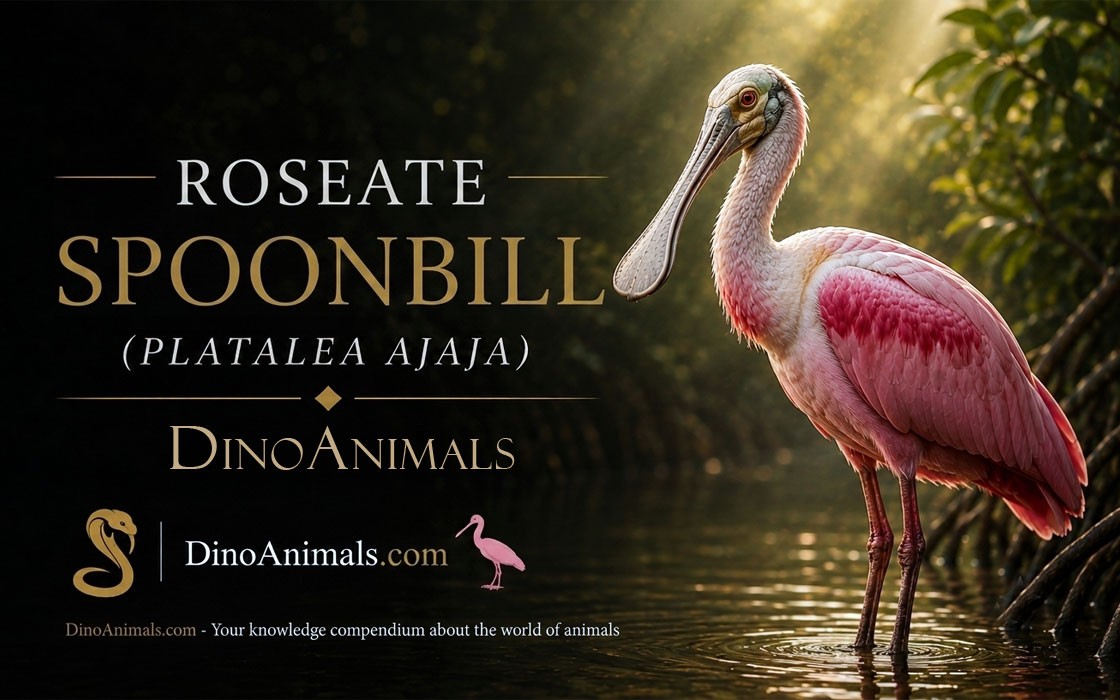
Roseate Spoonbill – A Pink Bird with a Spoon for a Bill
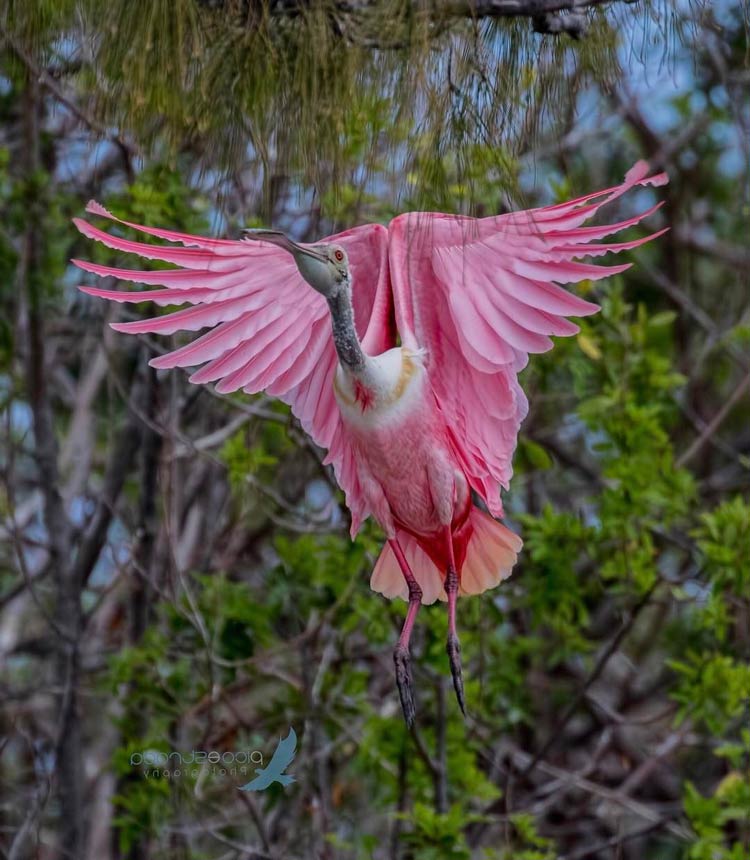
The Roseate Spoonbill (Platalea ajaja) is one of the most distinctive birds of the Americas. It is difficult to mistake it for any other species – it boasts vibrant pink plumage, long legs, and an extraordinary bill resembling a flattened spoon. Although it is sometimes mistaken for a flamingo from a distance, it is actually more closely related to ibises. For many years, Roseate Spoonbills were relentlessly hunted for their ornamental feathers used in fashion. Today, their population has rebounded in many regions, and the sight of a flock of pink birds wading through mangroves is one of the most spectacular images of American wetlands.
Classification
- Kingdom: Animals (Animalia)
- Phylum: Chordates (Chordata)
- Class: Birds (Aves)
- Order: Pelicaniformes (Pelecaniformes)
- Family: Ibises and spoonbills (Threskiornithidae)
- Genus: Platalea
- Species: Platalea ajaja
Occurrence
The Roseate Spoonbill inhabits vast areas of North, Central, and South America. It can be found from the southern United States, through Mexico, the Caribbean, and Central America, down to northern Argentina and Uruguay. It is most abundant in coastal wetlands.
Habitat
It prefers:
- coastal lagoons,
- estuaries,
- brackish marshes,
- mangroves,
- shallow lakes,
- river floodplains,
- inland wetlands.
It most frequently forages in shallow water with a depth not exceeding a few dozen centimeters (approx. 12–24 inches).
Characteristics
The Roseate Spoonbill is a large wading bird with a slender silhouette.
Dimensions
| Feature | Value |
| Body length | 71–86 cm (28–34 in) |
| Wingspan | 120–133 cm (47–52 in) |
| Body mass | 1.2–1.8 kg (2.6–4.0 lbs) |
Males are, on average, slightly larger than females.
Appearance
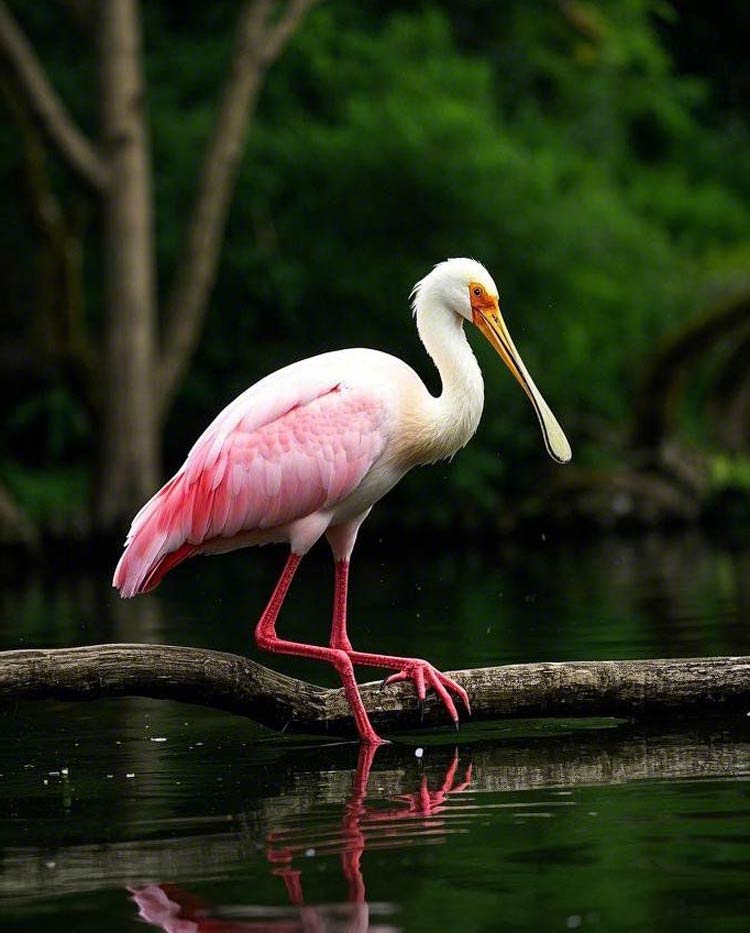
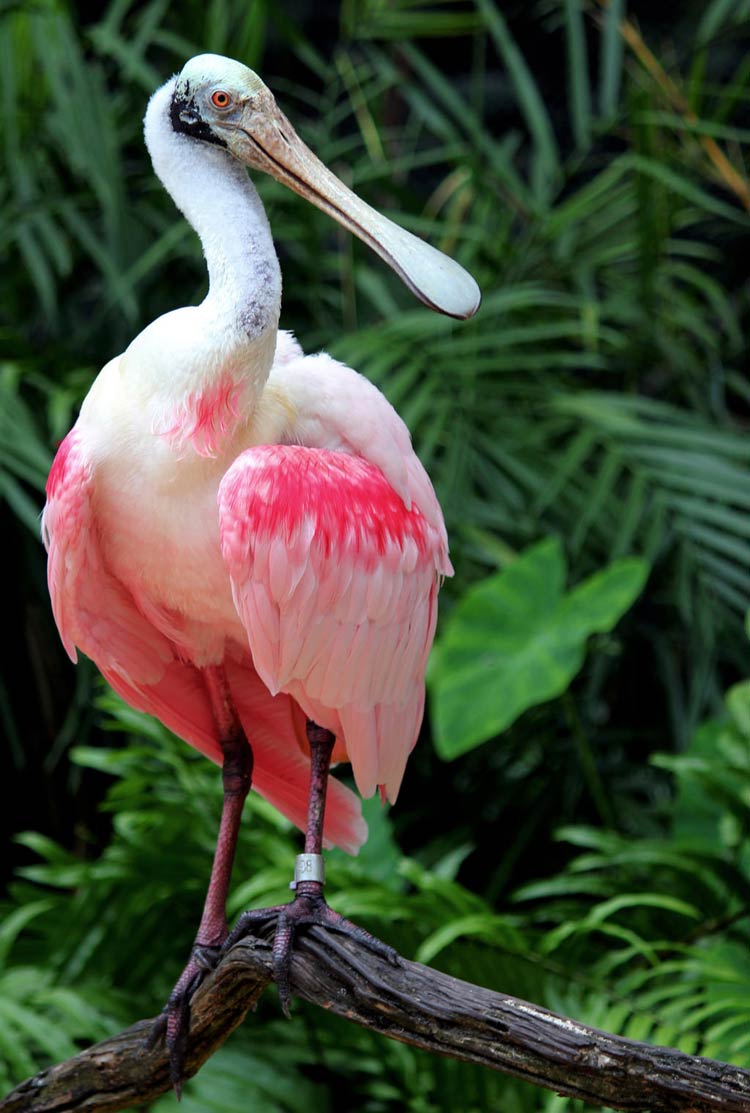
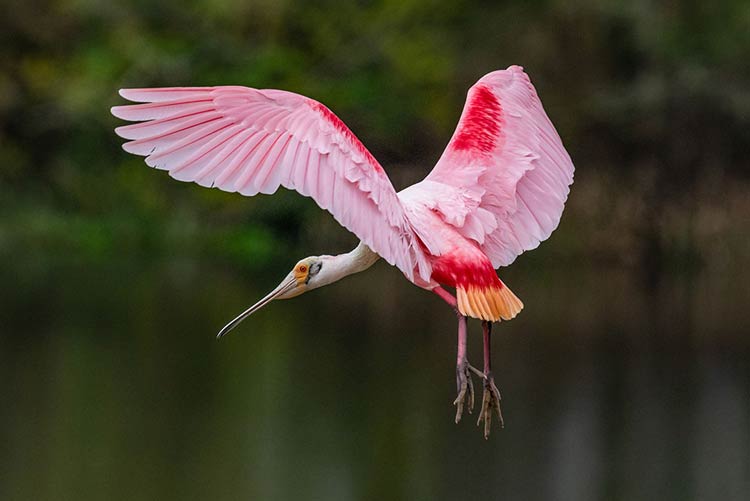
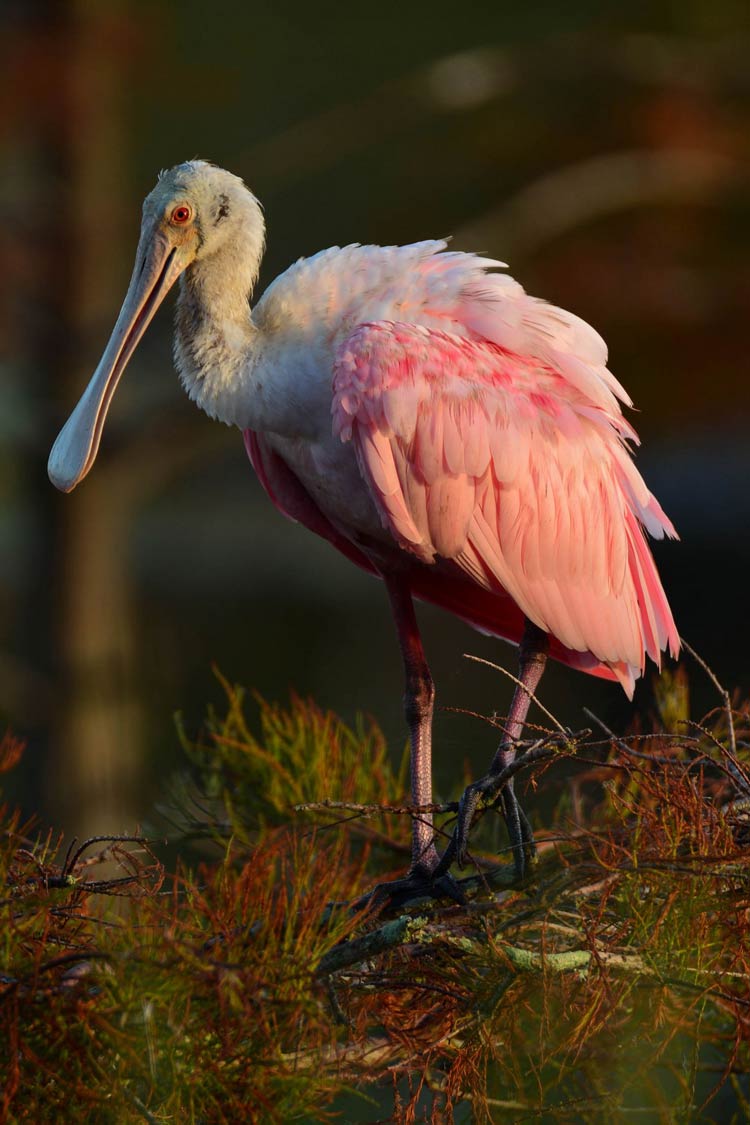
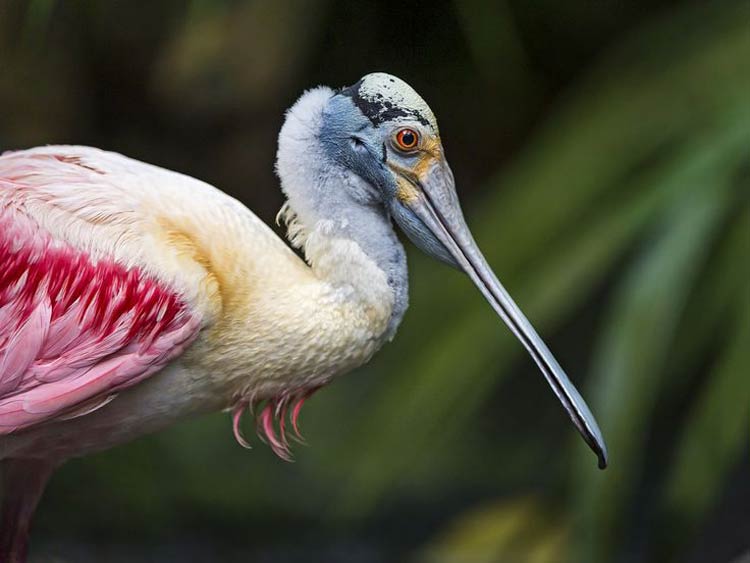
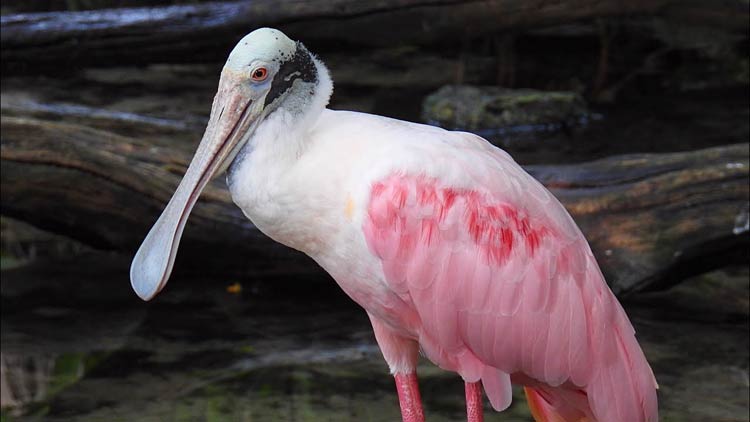
The most characteristic feature is the long, flattened bill that expands at the tip like a spoon. This allows the bird to effectively sweep through the water in search of food.
Adult individuals possess:
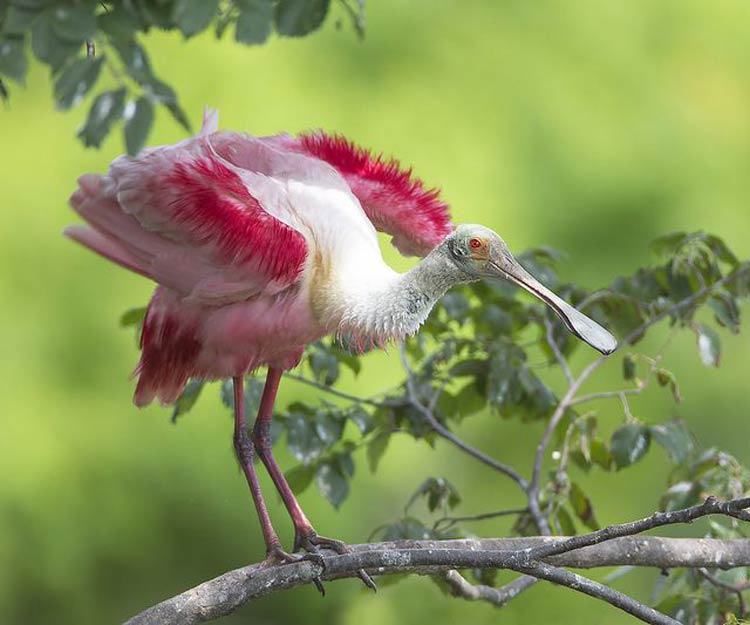
- vibrantly pink wings,
- red wing coverts,
- a white-and-pink neck and back,
- a bare, greenish head,
- red eyes,
- long, pink legs.
Juvenile birds are significantly paler. Their plumage is initially almost white and only acquires pink hues with age.
Why is the Spoonbill Pink?
Feather color is not an innate trait. Just like in flamingos, the pink coloration comes from carotenoids contained in their food. These pigments enter the body along with shrimp, crustaceans, and other small aquatic animals. Birds that feed on a diet poor in carotenoids become noticeably paler.
Diet
The Roseate Spoonbill is a specialized hunter of invertebrates and small aquatic vertebrates.
Its diet includes:




- shrimp,
- crabs,
- aquatic insects,
- snails,
- mollusks,
- small fish,
- insect larvae.
While foraging, the bird lowers its bill into the water and sweeps it from side to side. When sensitive mechanoreceptors detect prey, the bill snaps shut instantly. Unlike many other wading birds, the spoonbill relies primarily on touch rather than sight.
Behavior
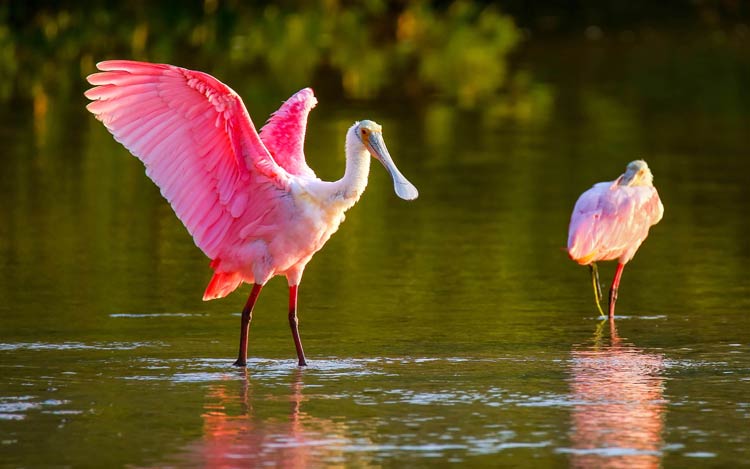
Roseate Spoonbills are highly social. They form flocks while foraging, resting, and flying between roosting sites.
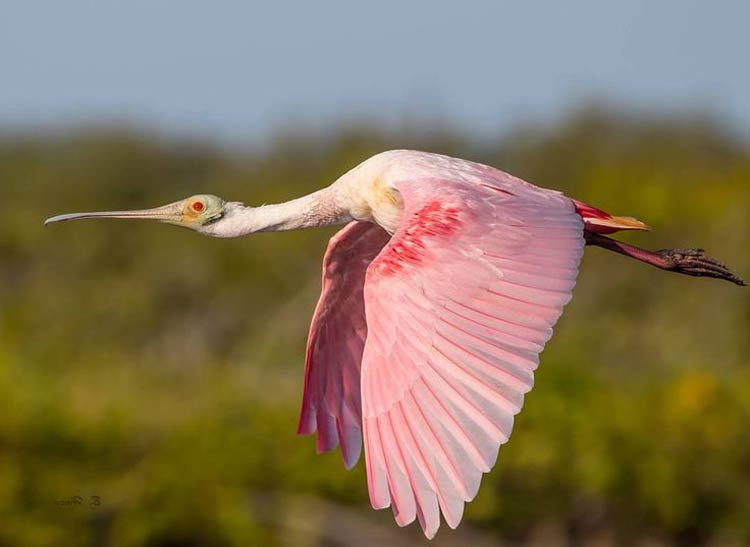
In flight:
- they extend their necks forward,
- they keep their legs extended straight behind their bodies,
- they frequently fly in loose formations.
They are often found alongside ibises, herons, cormorants, and storks.
Reproduction
The breeding season usually begins with the onset of the rainy season.
Nest
The birds establish nesting colonies ranging from a few to hundreds of pairs. Nests are most commonly built:
- in mangrove trees,
- in bushes overhanging the water,
- on small islands.
The male provides the building material, and the female shapes the nest using branches and leaves.
Eggs and Chicks
The female typically lays 2 to 5 eggs.
Key Data
| Feature | Value |
| Number of eggs | 2–5 |
| Incubation period | 22–24 days |
| Care | both parents |
| Nest fledging | after approx. 35–42 days |
The young are fed for a long time via regurgitation by the parents. The characteristic “spoon-like” shape of the bill develops gradually with age.
Threats
In the 19th century, Roseate Spoonbills were pushed to the brink of extinction across many parts of their range. The reason was the massive harvesting of feathers to decorate women’s hats.
Additional problems included:
- wetland drainage,
- water pollution,
- destruction of nesting colonies,
- human disturbance during breeding.
Thanks to legal protection and the establishment of reserves, their population numbers have significantly increased.
Conservation Status
The International Union for Conservation of Nature (IUCN) classifies the Roseate Spoonbill as a species of Least Concern (LC). This means it is currently not threatened with global extinction, though it locally remains dependent on the preservation of wetlands.
Roseate Spoonbill in Numbers
| Feature | Value |
| Scientific name | Platalea ajaja |
| Body length | 71–86 cm (28–34 in) |
| Wingspan | 120–133 cm (47–52 in) |
| Body mass | 1.2–1.8 kg (2.6–4.0 lbs) |
| Number of eggs | 2–5 |
| Incubation period | 22–24 days |
| Lifespan in the wild | approx. 10 years |
| IUCN Status | LC |
Interesting Facts
- The Roseate Spoonbill is the only representative of spoonbills with distinctly pink plumage.
- Its Latin species name, ajaja, originates from the Tupi language used by the indigenous people of Brazil.
- The bill of young individuals is initially straight and only takes on the characteristic spoon shape over time.
- In flight, the spoonbill extends its neck, whereas herons typically retract theirs.
- Pink flocks of spoonbills are among the most recognizable symbols of the wetlands of Florida and the Gulf Coast.
Recommended