Armadillo (Cingulata)
Armadillo – Armor, Species, Habitat and Interesting Facts
The armadillo is a mammal best known for its protective armor, which covers much of its body and helps defend it against predators. Its unusual appearance has also given rise to a popular misconception: that all armadillos can curl into a ball and roll away from danger. In reality, this remarkable defense mechanism is limited to just two living species. Most armadillos rely on their armor, powerful claws, burrowing abilities, and keen sense of smell to survive.
Armadillos inhabit Central and South America, while one species, the nine-banded armadillo (Dasypus novemcinctus), has expanded its range into the southern and central United States. Although they differ considerably in size, appearance, and behavior, all living armadillos share adaptations associated with their armored bodies and predominantly ground-dwelling lifestyles.
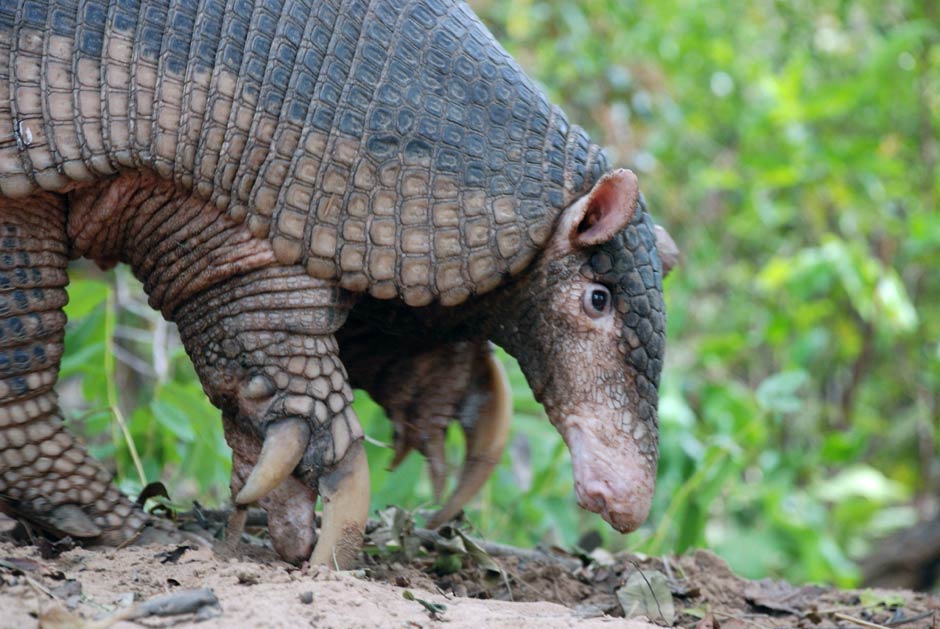
The giant armadillo (Priodontes maximus) – powerful claws and adaptations for digging
Classification
- Class: Mammals (Mammalia)
- Order: Cingulata
- Superorder: Xenarthra
Armadillos belong to the order Cingulata within the superorder Xenarthra. Modern classifications generally recognize two living families of armadillos: Dasypodidae, which includes the long-nosed armadillos of the genus Dasypus, and Chlamyphoridae, which includes most other living species. Depending on the taxonomic authority, approximately 20 living species are recognized.
Xenarthra (Xenarthra)
Armadillos belong to the same major evolutionary group as sloths and anteaters. These mammals originated in South America and possess distinctive anatomical features, including additional articulations between certain vertebrae. The name Xenarthra refers to these unusual joints.
Despite their shared ancestry, xenarthrans have evolved very different body forms and lifestyles. Sloths are adapted to life in trees, anteaters specialize in feeding on ants and termites, and armadillos are primarily terrestrial mammals equipped for digging. Their teeth are generally reduced or simplified compared with those of many other mammals, and their dentition varies considerably between species.
The evolutionary history of xenarthrans extends back to the Paleocene, although the exact timing of their earliest diversification remains a subject of scientific research. Today, living members of this group occur in Central and South America, with some species extending into North America.
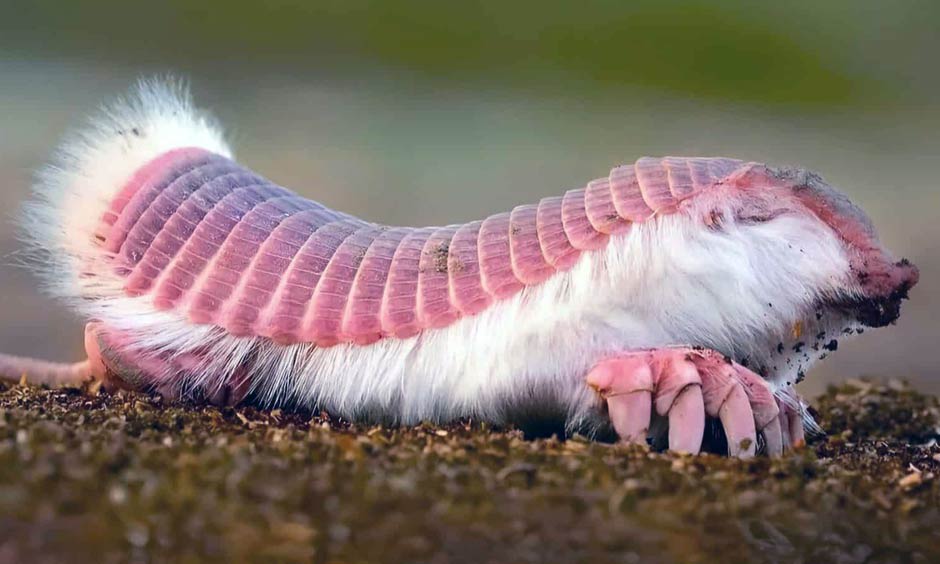
The pink fairy armadillo (Chlamyphorus truncatus) – the smallest species of armadillo
Distribution
Armadillos are native to the Americas. Most species occur in South America, where Brazil, Bolivia, Paraguay, and Argentina support particularly diverse armadillo communities. Their distribution ranges vary greatly: some species occupy extensive areas, while others are restricted to relatively small regions or specialized habitats.
The nine-banded armadillo (Dasypus novemcinctus) has the broadest distribution of any living armadillo. It occurs across much of Central America and northern South America and has expanded northward and eastward in the United States. Its range now extends well beyond Texas, including parts of the central and southeastern United States. Recent distribution studies have documented its establishment in additional states, including Iowa and Missouri.
This expansion is influenced by several factors, including relatively mild winters, suitable soils, food availability, and the species’ ability to adapt to a variety of environments. Cold weather remains an important limitation on its northward spread.
Another species, the northern naked-tailed armadillo (Cabassous centralis), occurs in parts of Central America and northwestern South America. Unlike the nine-banded armadillo, it does not have an established range extending across the central United States.




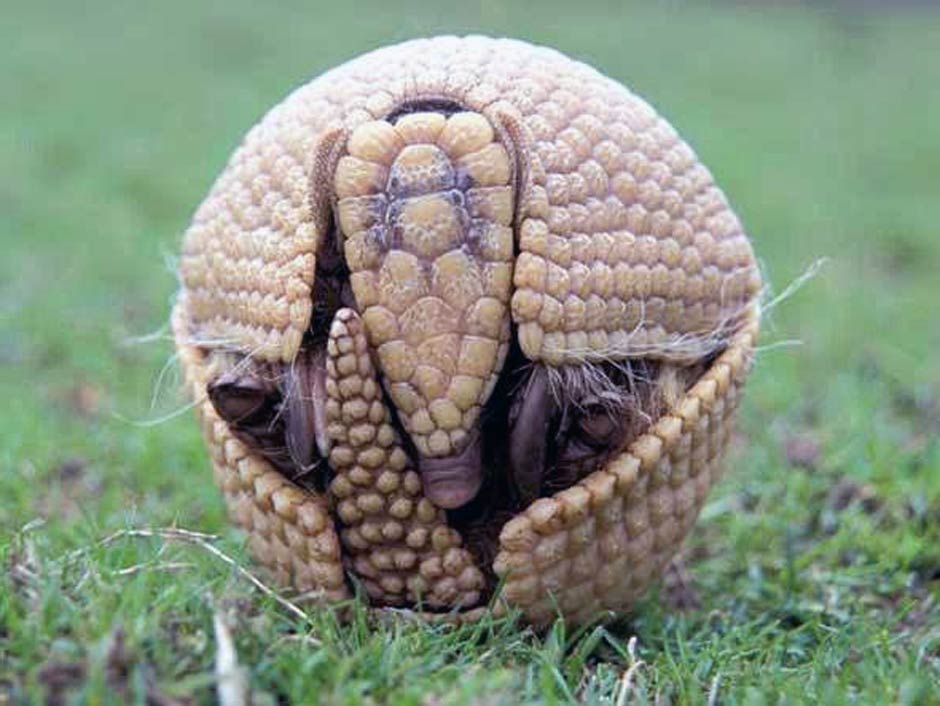
The Brazilian three-banded armadillo (Tolypeutes tricinctus) – endemic to eastern Brazil. It is one of only two species of armadillo that can roll into a ball (the other is the southern three-banded armadillo).
Habitat
Armadillos occupy a wide variety of habitats, including tropical rainforests, dry forests, savannas, grasslands, scrublands, and semi-arid regions. Some species prefer open environments, while others are associated with woodland or forest habitats.
The availability of suitable soil is particularly important. Most armadillos are accomplished diggers and need ground that can be excavated to create burrows or uncover food. Rocky terrain and hard, compacted soils can restrict their activity.
Temperature also influences their distribution. Armadillos generally have relatively low body temperatures and less effective temperature regulation than many other mammals of comparable size. Prolonged exposure to cold can limit their activity, reduce survival, and prevent populations from establishing in colder regions.
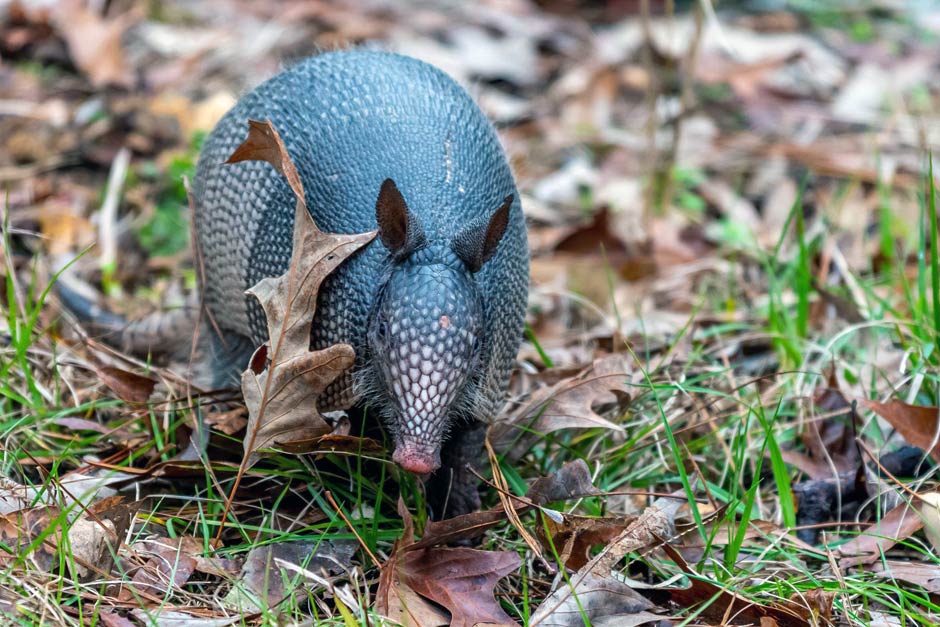
The nine-banded armadillo (Dasypus novemcinctus), also called the nine-banded long-nosed armadillo or common armadillo
Characteristics
Armadillos are small to medium-sized mammals whose most distinctive feature is their protective armor. This structure consists of bony plates embedded in the skin and covered by a layer of keratin, the same structural protein found in hair and nails. The armor is known as a carapace.
In most species, the carapace covers the head, back, flanks, and upper parts of the tail. The underside of the body remains largely unprotected by bony plates. Flexible bands of skin between the armored sections allow the animal to bend and move. The number and arrangement of these bands differ between species.
Armadillos also have short, sturdy limbs and strong claws adapted for digging. Their forelimbs are particularly powerful, enabling them to excavate burrows, search for underground prey, and uncover insect larvae. The number of toes on the front feet varies among species.
Their bodies are generally covered with sparse, coarse hairs, although the amount of hair varies considerably. Some species have noticeably hairy bodies, while others appear almost hairless.
Body coloration also varies. Gray and brown are common, but some species have yellowish or pinkish armor. The pink fairy armadillo (Chlamyphorus truncatus), for example, has a pale pink carapace and soft, whitish fur along its sides and underside.
Armadillos are not exceptionally fast runners. When threatened, they may flee, dig rapidly, or attempt to reach a burrow. Their ability to escape danger depends on the species, the terrain, and the nature of the threat.
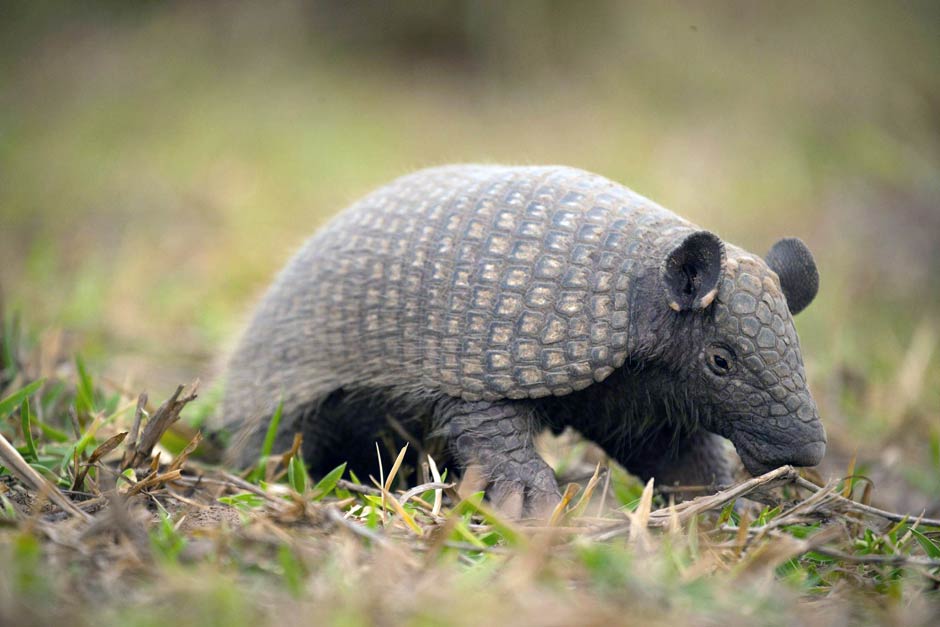
The six-banded armadillo (Euphractus sexcinctus), also known as the yellow armadillo
Diet
Armadillos have varied diets, although many species feed primarily on insects and other invertebrates. Their prey can include ants, termites, beetles, insect larvae, earthworms, and other small animals found in soil or leaf litter.
They use their strong claws to excavate the ground and their sensitive noses to locate food. Once prey has been uncovered, a long, narrow tongue helps them collect it. Some species also consume spiders, snails, small vertebrates, eggs, fruit, or other plant material.
Diet varies according to the species and the resources available in its habitat. The giant armadillo (Priodontes maximus), for example, feeds extensively on ants and termites, whereas the six-banded armadillo (Euphractus sexcinctus) has a more varied diet that can include both animal and plant matter.
Senses
Armadillos generally have relatively poor eyesight, but they compensate with a well-developed sense of smell. This is particularly important when searching for prey hidden underground or beneath vegetation.
Their hearing also helps them detect sounds in their surroundings. Sensitive hairs on parts of the body can provide additional tactile information when they move through vegetation or narrow spaces.
Their strong claws are essential not only for feeding but also for constructing burrows, which provide shelter, resting places, and protection from temperature extremes and predators.
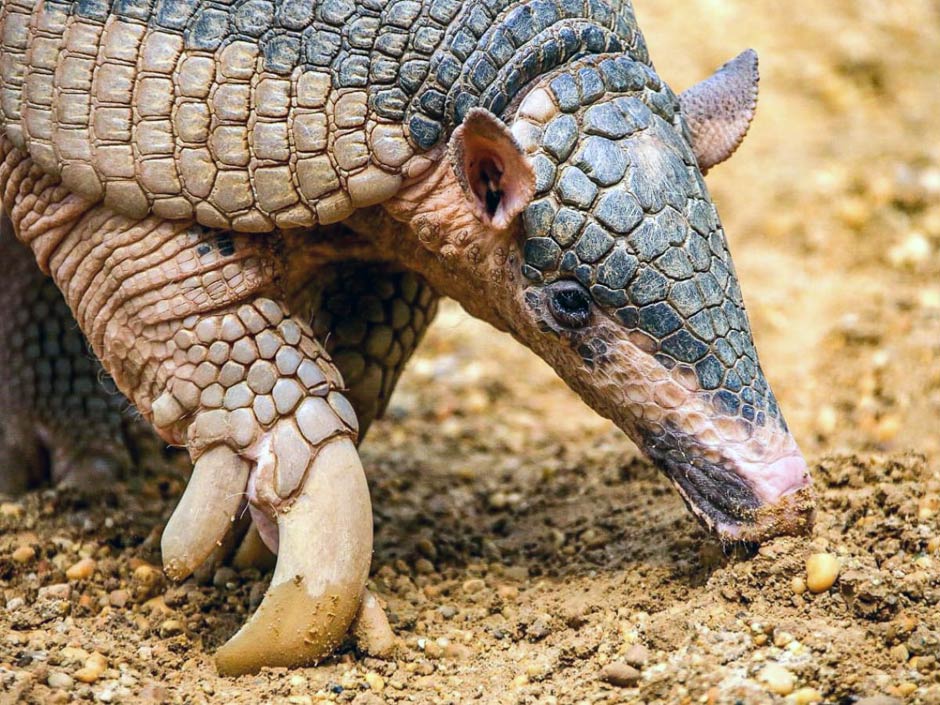
The giant armadillo (Priodontes maximus), colloquially tatu-canastra, tatou, ocarro or tatú carreta – the largest living species of armadillo
Lifestyle
Most armadillos are solitary animals. Adults generally forage alone and use burrows for shelter. Depending on the species and local conditions, they may be active during the day, at night, or around dawn and dusk.
Many species spend considerable time resting in underground burrows. The nine-banded armadillo can sleep for much of the day, sometimes for up to 16 hours under particular conditions, although activity patterns vary with temperature, season, and food availability.
Burrowing is central to their survival. Armadillos dig to find food, escape predators, and create sheltered places to rest and raise their young. Abandoned burrows may later be used by other animals, making armadillos important contributors to their ecosystems.
Reproduction and Development
Reproductive biology differs substantially among armadillo species. Gestation periods, litter sizes, breeding seasons, and the age at which young become independent are not the same throughout the group.
Depending on the species, females may give birth to one or several offspring. Newborns of many species have soft, flexible armor that gradually hardens as they develop. The young remain in a sheltered burrow during their early life and are nourished by their mother’s milk before gradually transitioning to solid food.
The nine-banded armadillo (Dasypus novemcinctus) is particularly unusual. A single fertilized egg normally develops into four genetically identical offspring of the same sex. This phenomenon is known as polyembryony. The species can also delay implantation of the embryo, allowing birth to occur under more favorable seasonal conditions.
Sexual maturity varies among species, generally occurring within the first year or two of life in many of the better-studied species. Reliable information about reproductive rates and lifespan remains limited for some rare or elusive armadillos.
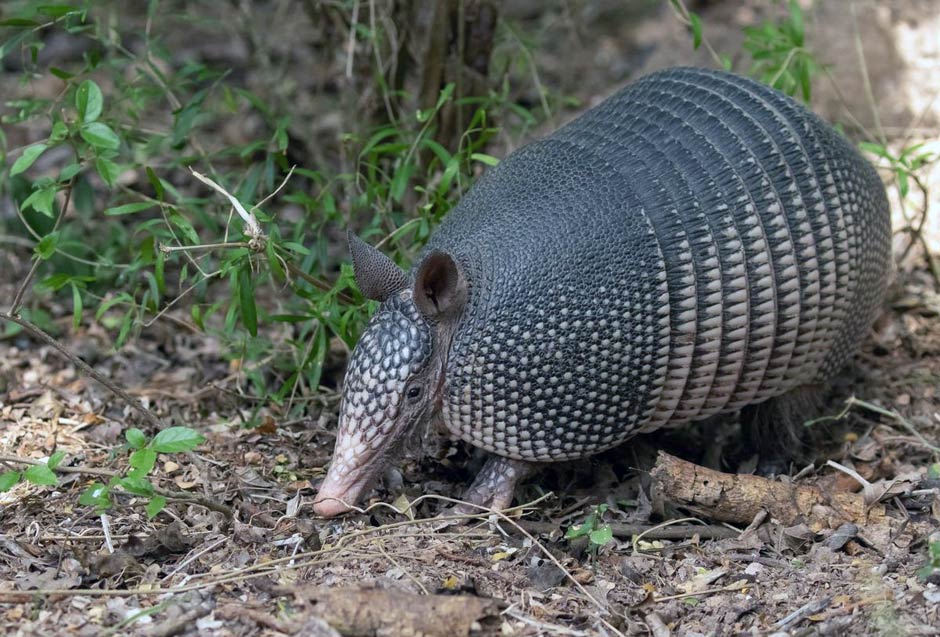
The nine-banded armadillo (Dasypus novemcinctus)
Threats
Armadillos face several threats, particularly habitat loss and fragmentation caused by agriculture, urban development, and other human activities. Roads are another significant source of mortality, especially for species that forage near settlements or cross roads while searching for food.
Some armadillos are hunted for their meat, and their shells have historically been used to make decorative objects and musical instruments. In other places, they may be killed because their digging damages lawns, gardens, or agricultural land.
The impact of these threats differs between species. Some widespread armadillos remain relatively adaptable, while species with restricted distributions or specialized habitat requirements may be much more vulnerable. Conservation assessments must therefore be considered on a species-by-species basis.
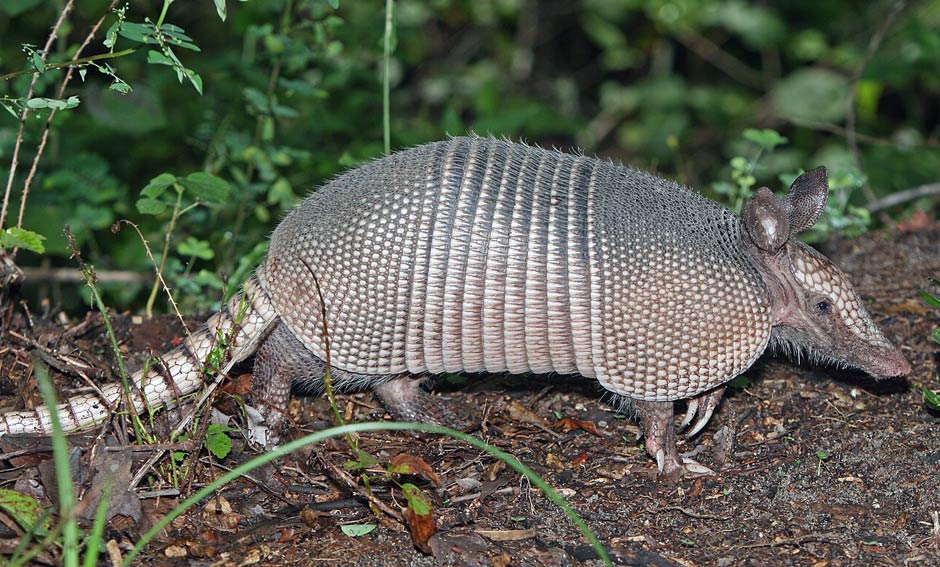
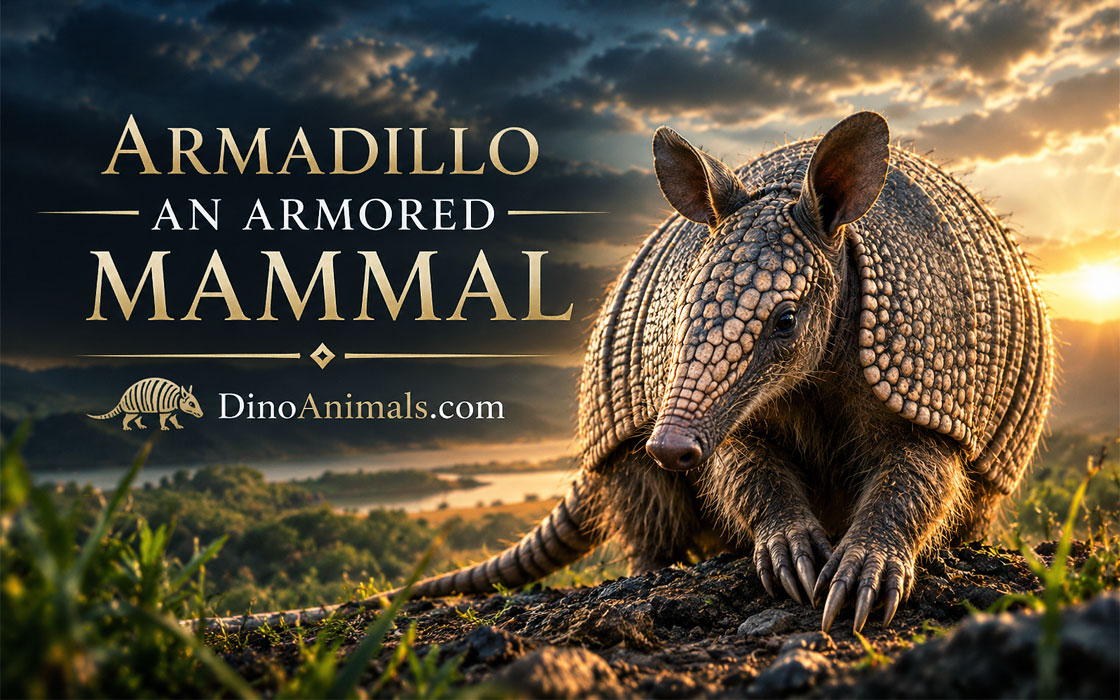
Armadillo – an Armored Mammal
Detailed Data / Dimensions
- Armadillos vary greatly in size, from tiny subterranean species to large, powerful diggers.
- The smallest living species is the pink fairy armadillo (Chlamyphorus truncatus). It measures approximately 11–15 cm (4.3–5.9 in) from the head to the base of the tail and weighs around 100 g (3.5 oz). It is highly specialized for a subterranean lifestyle and is rarely observed in the wild.
- The largest living species is the giant armadillo (Priodontes maximus). Its head-and-body length can exceed 1 m (3.3 ft), excluding the tail, and large individuals can weigh around 30–50 kg (66–110 lb), with exceptional estimates reaching approximately 60 kg (132 lb).
- The nine-banded armadillo (Dasypus novemcinctus) is considerably smaller. Its head-and-body length is typically about 38–58 cm (15–23 in), with a tail measuring approximately 26–53 cm (10–21 in). Adults commonly weigh around 3.5–7.5 kg (7.7–16.5 lb), although body mass varies.
These measurements are approximate. Individual size depends on species, age, sex, geographical location, and environmental conditions.
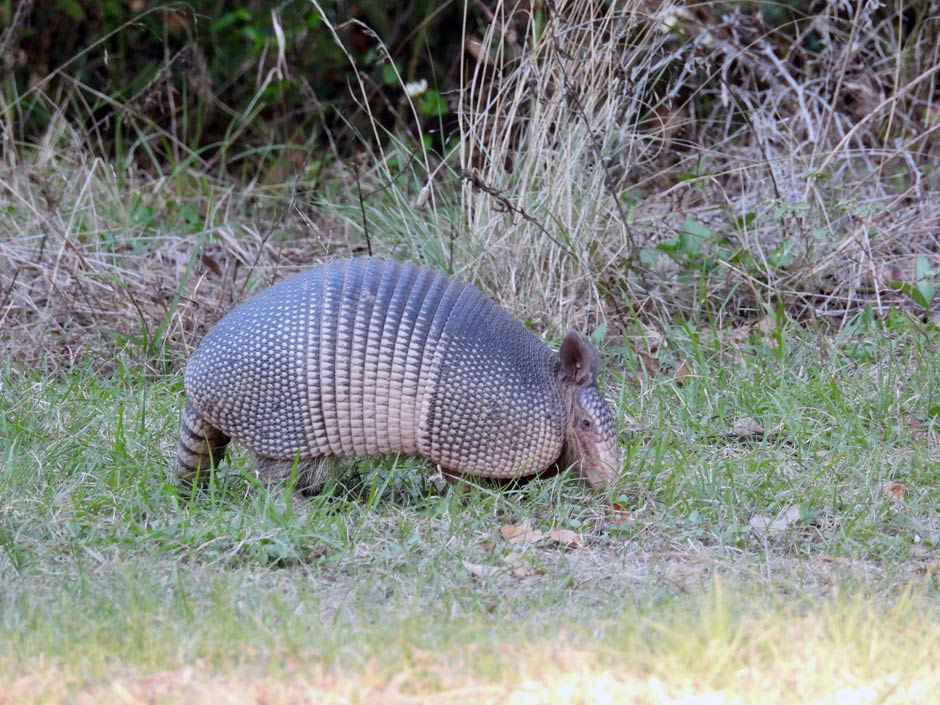
Armadillo – an Armored Mammal
Armadillos – Interesting Facts
- Only two living species can curl into a ball. The Brazilian three-banded armadillo (Tolypeutes tricinctus) and the southern three-banded armadillo (Tolypeutes matacus) can close their armored bodies into a compact ball. Most other armadillos cannot do this because their armor and body structure do not permit complete closure.
- Armadillos are capable swimmers. They can paddle through water and, in some circumstances, cross shallow streams by walking along the bottom while holding their breath. The nine-banded armadillo can also swallow air, increasing its buoyancy and helping it float.
- Their armor is not completely rigid. Flexible bands between the bony plates allow many armadillos to bend and move while retaining substantial protection over their backs.
- Their digging benefits other animals. Burrows created by armadillos may later provide shelter for other mammals, reptiles, and invertebrates.
- Nine-banded armadillos commonly produce identical quadruplets. Their offspring develop from a single fertilized egg, making this species an unusual subject for research into development, genetics, and differences between individuals.
- Cold weather can restrict their range. Armadillos do not possess the same degree of insulation and temperature regulation as many other mammals. Prolonged cold can be particularly challenging for species adapted to warmer environments.
- Some armadillos are difficult to study. The pink fairy armadillo spends much of its life underground, and its elusive behavior means that scientists still know relatively little about its population size and ecology.