Wadi Rum – A Cinematic Desert From Mars
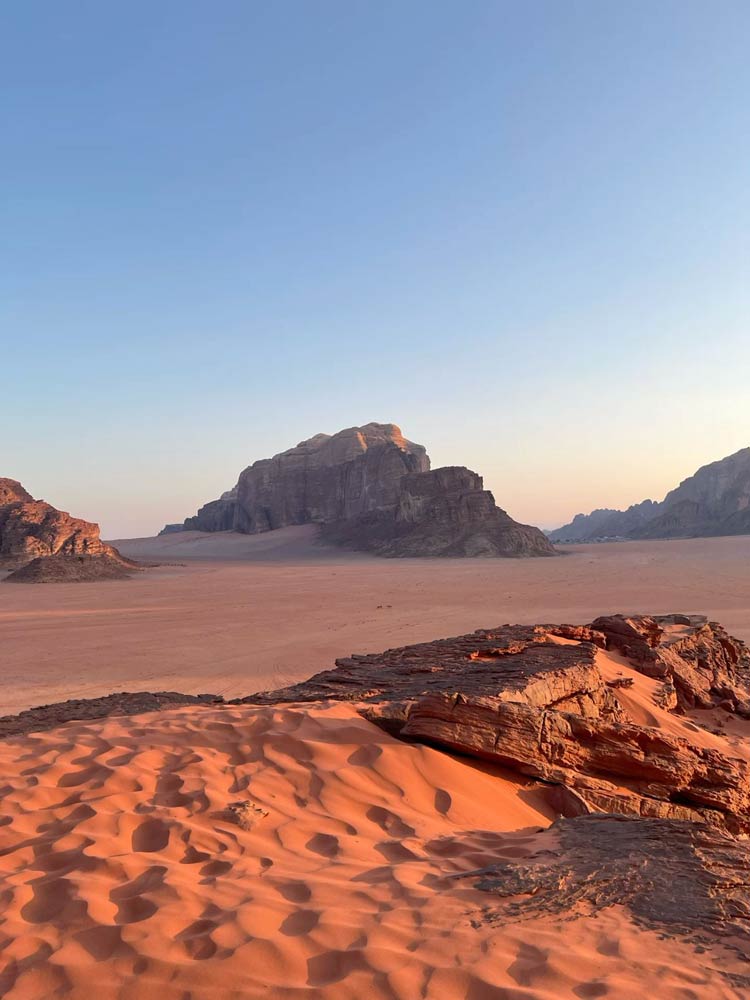
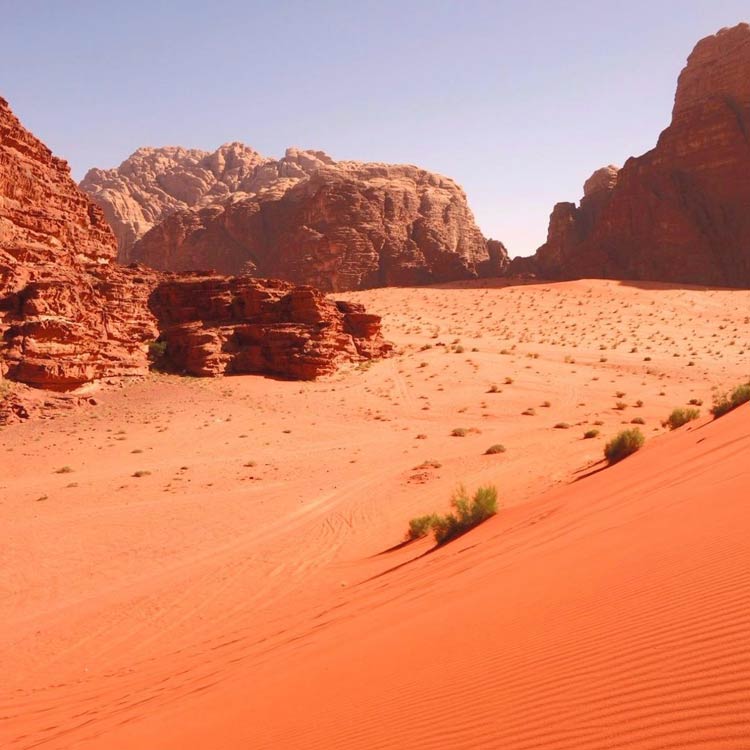
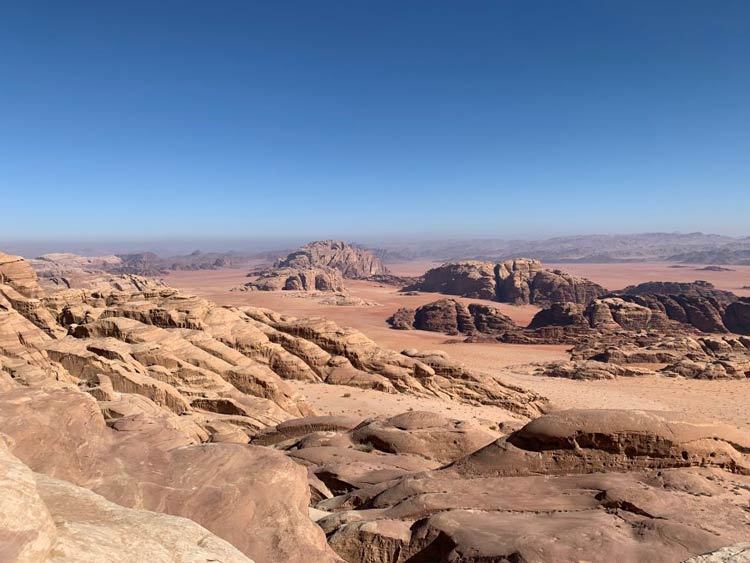
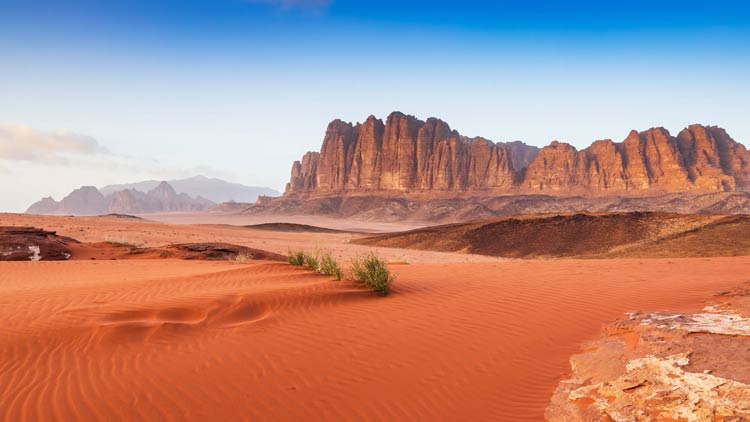
We most often imagine a desert as an endless sea of sand. Wadi Rum very quickly demonstrates how great of an oversimplification this is. After just a few minutes of being there, it becomes clear that this is no ordinary desert. Instead of a monotonous plain, massive sandstone walls rise hundreds of meters (hundreds of feet) above the red dunes, narrow canyons lead deep into a rocky labyrinth, and natural rock bridges look as though they were crafted by a giant sculptor.
Valley of the Moon
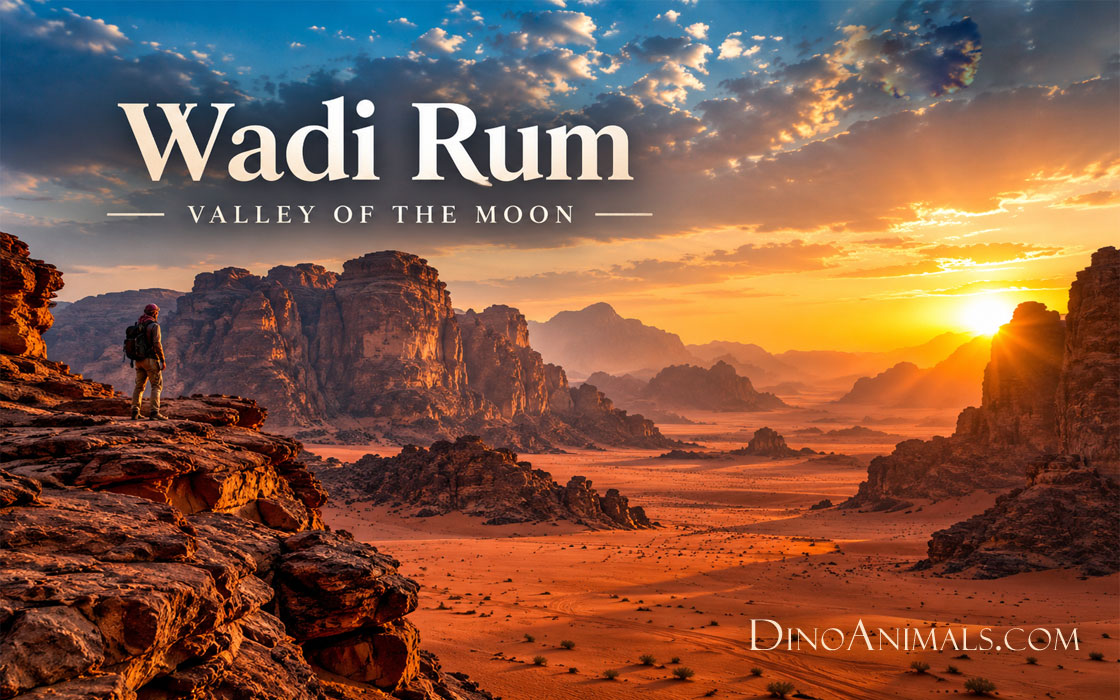
It is no wonder that Wadi Rum has earned the nickname “Valley of the Moon.” Many visitors get the impression that they have found themselves not on Earth, but on an alien planet. Interestingly, this impression is not purely subjective – it is right here that films depicting Mars and other worlds from science fiction movies have been shot multiple times.
However, the greatest strength of Wadi Rum is not its cinematic associations. This place owes its extraordinary appearance to millions of years of wind and water erosion and climate change. The region’s unique geology is primarily defined by the Jebel Rum sandstone formulation, sitting atop a crystalline granite basement. The result is a landscape so spectacular that even the most successful photographs capture only a fraction of its charm. Only by standing amidst the red sands, at the foot of monumental cliffs, can one understand why Wadi Rum is considered one of the most beautiful desert landscapes in the world.
Location
Where Wadi Rum Lies and What It Actually Is
Wadi Rum is located in southern Jordan, approximately 60 km (37 miles) from Aqaba (Jordan’s only seaport) and near the border with Saudi Arabia. Although it is often spoken of as a separate desert, it is in reality a fragment of a vast belt of arid lands extending across a significant portion of the Arabian Peninsula.
On a map, it looks inconspicuous. In the field, however, it leaves a completely different impression. Instead of a flat desert, a landscape appears that resembles stone archipelagi rising out of a red sea of sand. Individual rock massifs stand out from their surroundings like islands, and wide valleys stretch between them, which for thousands of years have served humans and animals as natural migratory routes.
It was precisely this position at the crossroads of trade routes that ensured Wadi Rum was not an isolated desert for thousands of years. Merchants, pastoralists, caravans, and travelers heading between the south of Arabia and the Levant (the historical geographical region comprising countries on the eastern, Asian coast of the Mediterranean Sea) passed through here. To this day, traces of these ancient journeys can still be found in the rocks.
For modern Bedouins, the desert still remains something more than a tourist attraction. It is a part of their history, tradition, and daily life. Because of this, Wadi Rum is not merely a spectacular landscape. It is a place where nature and culture have formed an inseparable whole for thousands of years.
Stone Chronicle of the Earth
Geology of Wadi Rum
If Wadi Rum has a main character, it is undoubtedly the rocks.
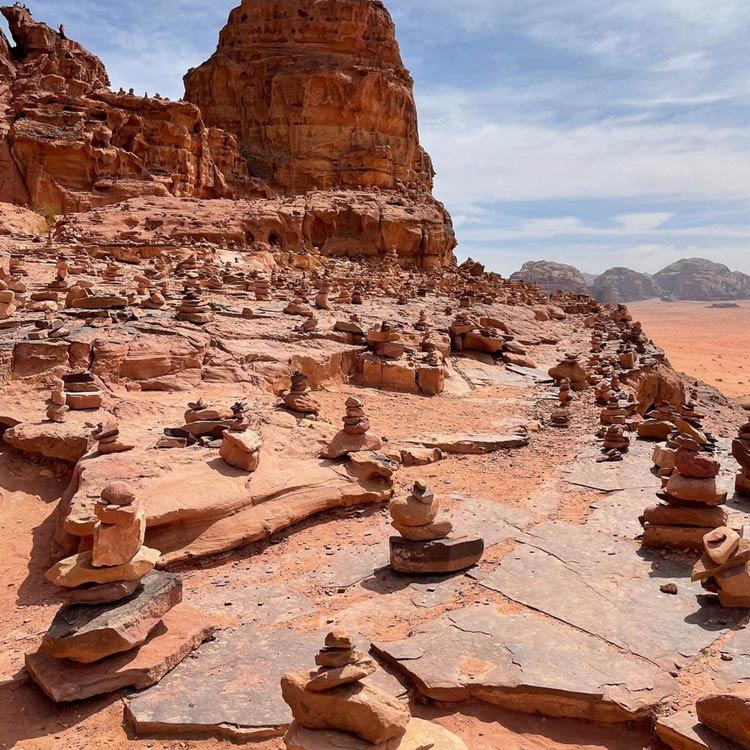
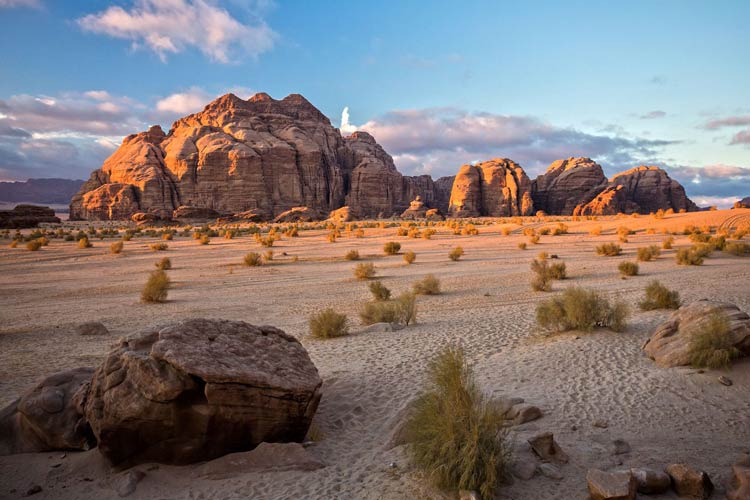
The most characteristic formations are created by massive sandstone massifs rising up to several hundred meters (hundreds of feet) above the surrounding desert. In many places, they look as though they were sculpted with a chisel. In reality, their author was the wind, sporadic downpours, and time measured not in centuries, but in millions of years.
Walking through Wadi Rum, one can see almost an entire catalog of desert landforms: deep canyons, rock bridges, vertical walls, extensive landslides, and labyrinths of fissures. Some passages are so narrow that two people can pass each other only with difficulty. A few hundred meters (hundreds of feet) further, the landscape suddenly opens up into a vast valley resembling a natural amphitheater.
The secret of these extraordinary shapes lies in the geological structure of the region. Sandstones deposited on older granite rocks dominate here. This structural contact between the younger Paleozoic sedimentary layers and the ancient Precambrian basement represents a classic example of an unconformity. Individual rock layers differ in hardness; therefore, erosion does not destroy them uniformly. Certain rock fragments disappear faster, while others remain, creating fanciful towers, arches, and walls.
The spectacle of colors is particularly spectacular. At dawn, the rocks take on shades of gold and orange. At noon, reds and browns dominate, and just before sunset, some walls look as if they are glowing from within. It is precisely then that one can best see why many geologists consider Wadi Rum to be one of the most picturesque natural laboratories of erosional processes in the world.




Desert of People
The Nabataeans, Bedouins, and Ancient Travelers
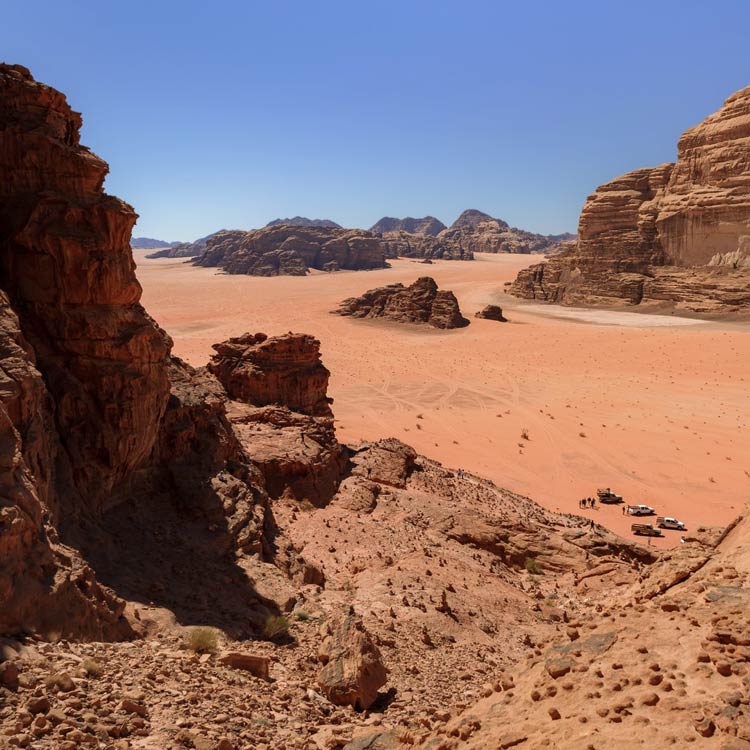
Looking at the vast spaces of Wadi Rum, it is easy to get the impression that humans only appeared here along with modern tourists. In reality, people have lived and traveled through this region for thousands of years.
The oldest traces of human presence date back approximately 12,000 years. Hundreds ogeogrf petroglyphs (rock carvings – images and symbols carved into rock faces) and inscriptions have been preserved in the stone walls, depicting animals, humans, hunting scenes, and symbols whose meaning in many cases remains a mystery. These inscriptions are primarily written in Thamudic, Safaitic, and early Nabataean scripts, which directly contributed to the evolution of modern Arabic. Some of them look as fresh as if they had been etched just a few generations ago.
The Nabataeans played a particularly vital role here – the same people who created the famous city of Petra. For them, Wadi Rum was not a remote wasteland, but a crucial hub within a vast network of trade routes connecting southern Arabia with the Levant and the Mediterranean coasts. Caravans transported frankincense, myrrh, spices, and other precious commodities through here, with the desert valleys serving as natural transit corridors.
For the modern traveler, it is especially fascinating that Wadi Rum and Petra were parts of the exact same world. Petra, located approximately 100 km (62 miles) to the north, served as the capital of the Nabataean Kingdom (Regnum Nabataeae) and one of the most important commercial hubs of the ancient Near East. Merchants traversing the deserts of Arabia transported frankincense, spices, and other valuable goods through these valleys before they ever reached the rock-cut city itself.
Petra and Wadi Rum
Today, many visitors explore Petra and Wadi Rum during a single journey. This is an excellent combination, as both locations showcase two distinct faces of the same history: Petra reveals the extraordinary achievements of the Nabataean civilization, while Wadi Rum allows one to see the landscape that surrounded its inhabitants for centuries and constituted a natural part of their world.
Lawrence of Arabia
In the 20th century, Wadi Rum gained additional fame through Thomas Edward Lawrence, widely known as Lawrence of Arabia. It was right here, during the Arab Revolt against the Ottoman Empire, that Bedouin forces supported by the British officer operated. Although cinematic legend has somewhat exaggerated his role, Lawrence’s name remains inextricably linked to this region to this day.
Bedouins
The Bedouins, however, remain the most deeply connected to the desert. Over centuries, they have learned to utilize every bit of shade, every water source, and every valley offering shelter from the scorching sun. They belong to several major tribal confederATIONS, such as the Howeitat (Banu Huwaytat) and the Zalabia, who transitioned from nomadic pastoralism to sustainable eco-tourism. It is thanks to their knowledge that many visitors today can experience Wadi Rum not merely as a landscape, but also as a place with its own history, tradition, and culture.
Life on the Edge of Survival
Flora and Fauna of the Desert
At first glance, Wadi Rum appears almost devoid of life. However, one only needs to pause for a moment and look closer to discover that the desert is teeming with life – albeit entirely on its own terms.
Scientists have recorded at least 183 plant species, 26 mammal species, 34 reptile species, and approximately 120 bird species here. This is an impressive biodiversity for an area where rain is a rare and unpredictable visitor.
Plants have learned to function with a minimal amount of water. Among the dunes and gravel plains grow drought-resistant shrubs, such as the white saxaul (Haloxylon persicum), white weeping broom (Retama raetam), and fire bush (Calligonum comosum). In areas where there is slightly more moisture beneath the surface, one can encounter umbrella thorn acacias (Vachellia tortilis), whose wide, spreading canopies provide shade for humans and animals alike.
The animal kingdom is even more surprising. Nubian ibexes (Capra nubiana) live among the rocks, navigating almost vertical walls with ease. At night, Arabian red foxes (Vulpes vulpes arabica) and Rüppell’s foxes (Vulpes rueppellii) emerge to hunt, while Arabian wolves (Canis lupus arabs) are still encountered in the more remote parts of the reserve. Additionally, the Arabian oryx (Oryx leucoryx), which was once extinct in the wild, has been successfully reintroduced into the protected area.
The desert rocks are also inhabited by numerous reptiles. During the day, one can spot lizards darting between stones, as well as various species of geckos and agamas utilizing every patch of shade. Notable among these is the Sinai agama (Pseudotrapelus sinaitus), which becomes striking bright blue during the breeding season.
Birds of prey regularly soar over the valleys. Golden eagles (Aquila chrysaetos), falcons, and kestrels utilize the thermal updrafts created by the heated rock walls. For birdwatchers, Wadi Rum is far more fascinating than its desert reputation might suggest.
Life in Wadi Rum is not easy. Every single drop of water matters, and many organisms are active primarily at night. Because of this, however, the desert has become a sanctuary where species perfectly adapted to some of the harshest environmental conditions in the Middle East have survived.
Day, Night, and a Sea of Stars
Climate, Light, and the Starry Sky
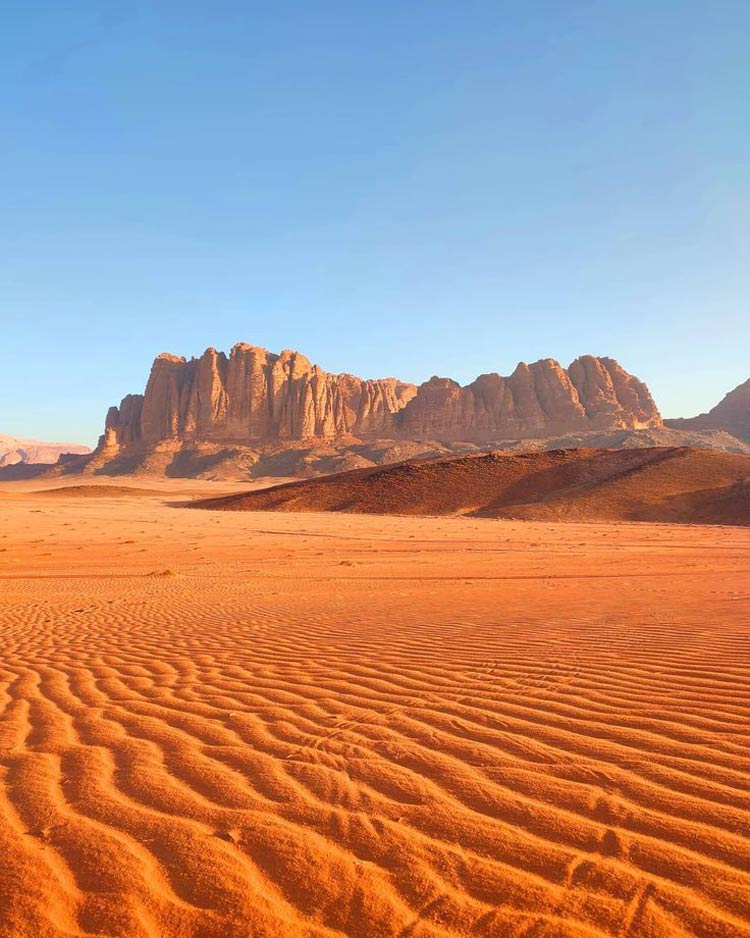
Wadi Rum is easiest to comprehend at dawn or just before sunset. It is precisely then that the desert displays its most spectacular face.
During the day, the sun relentlessly heats the sand and rocks. The air shimmers above the scorching ground, and distant massifs appear to float above the horizon like mirages. However, as the sun moves, the landscape begins to shift. Reds transform into oranges, oranges into gold, and the highest rock walls cast increasingly long shadows cutting across the valleys.
The desert lives by the rhythm of light. The exact same rocks can look completely different in the morning, at noon, and in the evening. It is no wonder that photographers can spend hours in a single spot, waiting for the perfect moment.
Another transformation occurs after sunset. The dry desert air dissipates heat very rapidly due to low thermal insulation, which is why the temperature can drop significantly within just a few hours. The daytime heat gives way to a cool chill, and the desert becomes astonishingly quiet. During summer, daytime temperatures regularly exceed 40°C (104°F) but can drop to around 20°C (68°F) at night, while in winter, nighttime temperatures can plummet near 0°C (32°F).
It is then that attention is drawn not to the earth, but to the sky. Far from large cities and artificial light pollution, Wadi Rum ranks among the finest locations in the Middle East for stargazing. The Milky Way is frequently visible as a brilliant band cutting across the firmament, and the sheer number of discernible stars can surprise even those accustomed to astronomical observations. Wadi Rum is an excellent example of an un-designated dark sky park.
It is precisely the night that makes many travelers reminisce about Wadi Rum long after returning home. It is difficult to forget the moment of sitting amidst the red sands, surrounded by the dark silhouettes of rock massifs, while overhead stretches a sky looking almost exactly as it did thousands of years ago, when the first caravans journeyed across this very same desert.
Tourism and Sightseeing
What is Worth Seeing in Wadi Rum
Wadi Rum is not a place to be explored on a “point-to-point” basis. True, one can find many specific attractions on a map, but it is the sheer space itself that leaves the greatest impression. It is one of those landscapes where the route between locations is often just as spectacular as the destination itself.
One of the most recognizable symbols of the region is the Seven Pillars of Wisdom – a massive rock formation visible upon entering the reserve. Although many people assume the name originates from its distinct rock pillars, it was actually popularized by T.E. Lawrence, author of the book Seven Pillars of Wisdom. Geologically, the feature displays an outstanding example of vertical jointing in the sandstone layer.
It is also well worth visiting Khazali Canyon, a narrow gorge cutting deep into the sandstone walls. Numerous petroglyphs and inscriptions left by the desert’s ancient inhabitants are preserved on its sheer faces. This is one of those places where history has quite literally been written in stone.
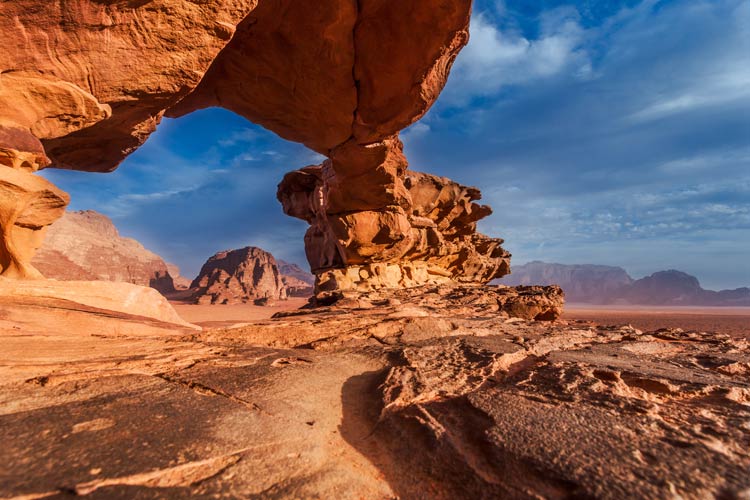
Natural rock bridges are among the area’s greatest highlights. The most famous of these, Um Fruth Rock Bridge, rises about 15 meters (49 feet) above the desert floor. A photograph taken at its summit has become an almost mandatory souvenir from Wadi Rum. Even more impressive is the Burdah Rock Bridge, one of the highest natural rock arches in the region, which requires a short scramble to reach. The canyon floors below these arches often harbor delicate micro-ecosystems featuring target species like the desert hedgehog (Paraechinus aethiopicus).
Panoramic view enthusiasts often venture to Jebel Rum (1,734 meters above sea level [5,689 feet]), the second-highest peak in Jordan. From its upper sections, one can admire a vast sea of red valleys and rock massifs stretching out to the horizon. In clear weather, visibility extends for dozens of miles.
Exploring the Deep Desert
Another intriguing location is Lawrence’s Spring – a small water source situated high on a mountainside. Although the spring itself is modest in size, the view stretching out from this vantage point ranks among the most beautiful in the entire reserve. Hydrogeologically, this perennial spring occurs where porous sandstone layers intercept an impermeable granite base, forcing underground water to the surface.
The most resilient hikers can tackle Jebel Umm ad Dami, the highest peak in Jordan at 1,854 meters above sea level (6,083 feet). It is located approximately 30 km (19 miles) south of Wadi Rum Village. On a clear day, the summit offers panoramic views not only of Jordan’s vast deserts but also the territorial expanses of Saudi Arabia.
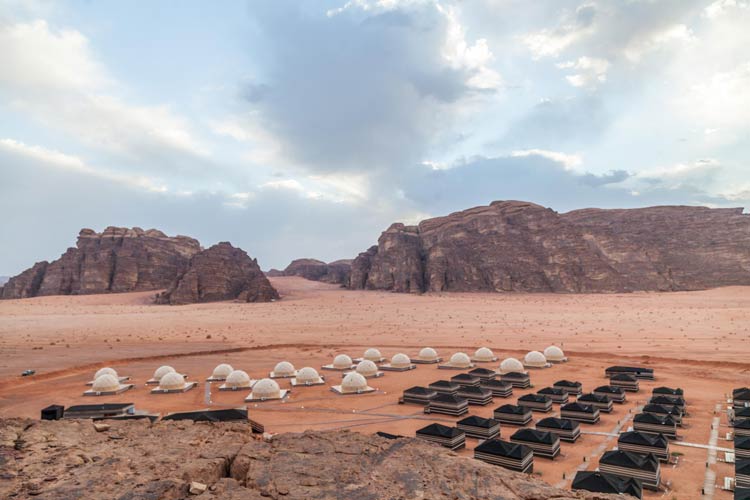
For many travelers, Wadi Rum serves as a natural extension of a visit to Petra. The two sites are separated by only a one-and-a-half to two-hour drive, which is why they are frequently combined within the same Jordanian itinerary. After a day spent among the monumental temples and tombs carved by the Nabataeans into the rose-red rock faces of Petra, spending the night under the stars amidst the crimson sands of Wadi Rum allows for a deeper comprehension of the environmental matrix in which one of the most remarkable civilizations of the ancient Near East flourished.
Yet, years down the road, many travelers do not remember the specific names of individual rock formations or canyons. Instead, they remember the exact moment when, sitting atop a red dune, they watched the sunset as the red sandstones gradually shifted in hue from deep orange to rich purple. It is in these quiet moments that Wadi Rum is truly remembered best.
Here is the precise, scientifically accurate English translation of this section of your article, incorporating all your formatting, structural, and scientific guidelines.
Wadi Rum in Culture and Film
The Cinematic Frontier
If one had to point to a desert that has enjoyed the most illustrious career in the world of cinema, Wadi Rum would be one of the premier contenders.
As early as 1962, it became one of the defining features of the film Lawrence of Arabia, widely regarded as one of the greatest masterpieces in cinematic history. The desert’s monumental landscapes perfectly captured the epic scale of the events unfolding during the Arab Revolt against the Ottoman Empire.
Later, Wadi Rum increasingly appeared on screens as a location “impersonating” otherworldly domains. The crimson sands, extraordinary rock formations, and near-total absence of modern civilization’s footprints make the landscape look more like the surface of an alien planet than a part of Earth.
It is no wonder, then, that scenes depicting the surface of Mars in the film The Martian (2015) were shot precisely here. The terrain was similarly utilized in major productions such as Dune, Star Wars: The Rise of Skywalker (2019), and the live-action adaptation of Aladdin (2019). To this list, one can add the movie sets of the following films: Red Planet (2000), Braking Point (1998), Transformers: Revenge of the Fallen (2009), The Frankincense Trail (2009), Prometheus (2012), The Last Days on Mars (2013), and Rogue One: A Star Wars Story (2016).
Filmmakers particularly prize Wadi Rum because nature itself creates many of the visual effects. The high concentration of iron oxide (Fe2O3) in the weathered sandstone coats the grains, creating the distinct hematite staining responsible for this hyper-realistic planetary palette. Consequently, the massive sandstone walls, rock arches, and red dunes look so extraordinary that they frequently require only minimal digital alterations.
Intriguingly, some visitors admit that upon arriving in Wadi Rum, they experience the exact inverse of what they felt while watching the films. They do not think the desert resembles Mars; rather, they begin to feel that our collective imagination of Mars resembles Wadi Rum.
From a sociological perspective, this hyper-reality has fueled fringe internet phenomena. Many conspiracy theorists actively argue that Mars rover missions, alongside the Apollo Moon landings, are entirely fabricated and were filmed right here within the Jordanian desert.
Wadi Rum – Detailed Data
- Name: Wadi Rum (وادي رم), also known as the Valley of the Moon
- Country: Jordan
- Location: Southern Jordan, about 60 km east of Aqaba and about 100 km south of Petra
- Geographic coordinates: 29°34′N, 35°25′E
- Protected area size: Approximately 740 km²
- Protection status: Protected Area since 1998
- UNESCO List: Inscribed as a UNESCO World Heritage site in 2011
- Landscape type: Sand and rock desert
- Dominant rocks: Sandstone and granite
- Highest peak: Jebel Umm ad Dami – 1,854 m a.s.l.
- Highest peak within the main reserve boundaries: Jebel Rum – approximately 1,734 m a.s.l.
- Average elevation: Approximately 900–1,200 m a.s.l.
- Climate: Hot desert climate
- Summer temperatures: Usually 30–40°C, higher during heatwaves
- Winter temperatures: Typically 5–20°C, can drop below 0°C at night
- Average annual precipitation: Less than 50 mm
- Best time to visit: March–May and September–November
- Popular activities: 4×4 off-road tours, trekking, rock climbing, camel riding, stargazing, landscape photography, and hot air balloon flights
- History of human presence: At least 12,000 years
Wadi Rum – Interesting Facts
- Valley of the Moon: Wadi Rum is often referred to as the “Valley of the Moon,” a name that perfectly captures its alien, almost otherworldly character.
- Location: The site is located in southern Jordan, near the border with Saudi Arabia. For travelers, it is also relatively close to Aqaba and Petra – about an hour from Aqaba and roughly two hours from Petra.
- Ancient History: Traces of human presence here date back 12,000 years, with petroglyphs and inscriptions preserved in the rocks documenting a very long history of human contact with the desert.
- Cinematic Setting: Wadi Rum has appeared on screen as Mars, Arrakis, and many other worlds, as filmmakers frequently make use of its natural landscape.
- Popular Activities: Official tourism materials list stargazing, 4×4 tours, camel riding, and hot air balloon flights as part of the local experience.

Podcast
Wadi Rum – Valley of the Moon
Wadi Rum: Is Mars Really Located in Jordan?
Can you feel as though you are on another planet without ever leaving Earth? In this episode of the DinoAnimals podcast, we will take you on a journey to Wadi Rum, known as the “Valley of the Moon” – a place so extraordinary that for decades it has successfully “impersonated” the surface of Mars in major Hollywood productions.
Listen to the podcast in which we introduce Wadi Rum, a Jordanian desert famous for its unique, almost cosmic landscape that has repeatedly served as the backdrop for blockbuster science fiction productions. We present the fascinating geology of the region, packed with monumental sandstone formations, natural rock bridges, and canyons sculpted by millions of years of aeolian and fluvial erosion.
We present a rich history of settlement, highlighting the ancient inscriptions of the Nabataeans, the culture of the Bedouins, and the legendary figure of Lawrence of Arabia. This is no ordinary journey – it is an encounter with the power of nature and history written in stone. It is a place where nature and culture have formed an inseparable whole for thousands of years, and every sunset over the crimson dunes becomes an unforgettable spectacle.