The History of the Largest Known Elephant
Henry the Elephant (The Fenykövi Elephant)
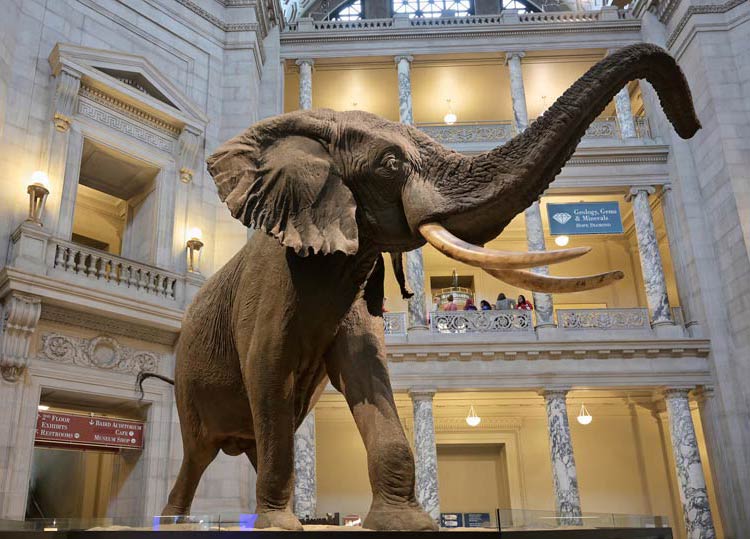
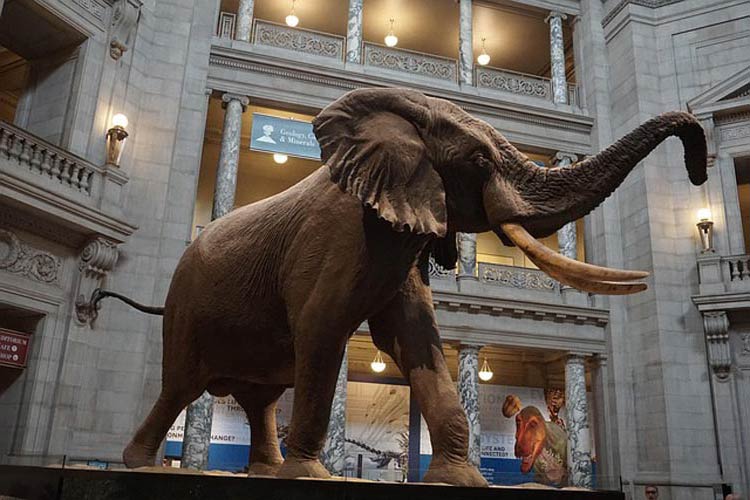
When we enter the National Museum of Natural History rotunda in Washington, D.C., the noise of thousands of tourists suddenly silences. The gaze of everyone – from children on school trips to the elderly – drifts upward. There, under the great dome, stands a majestic elephant – it is not merely an exhibit, it is a monument to a bygone era.
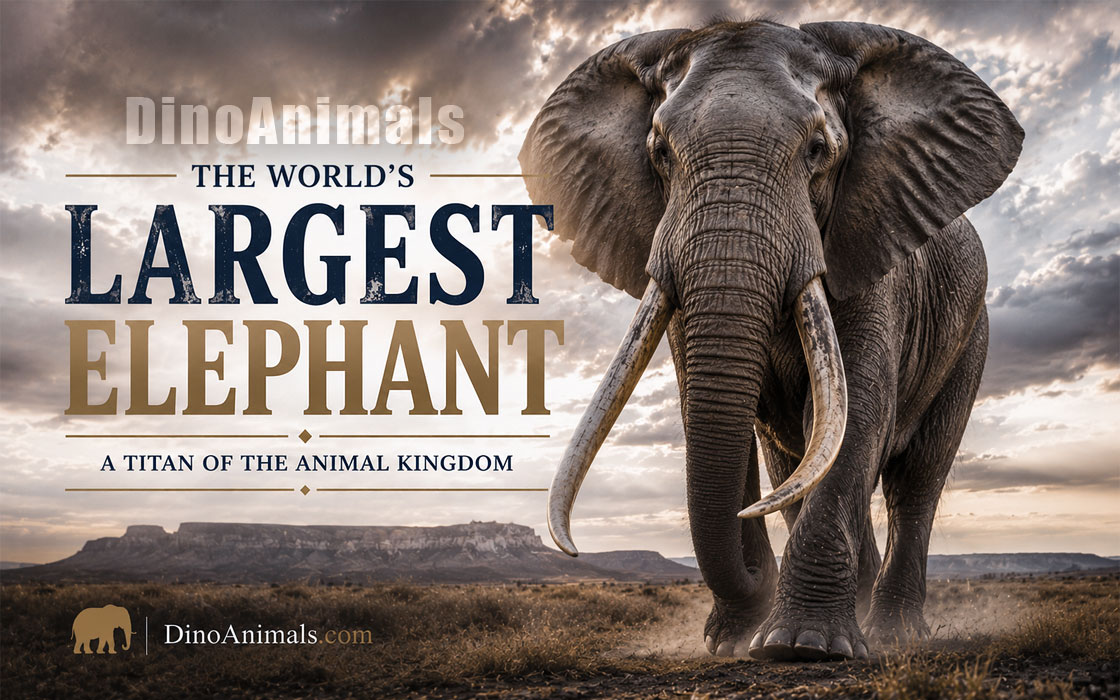
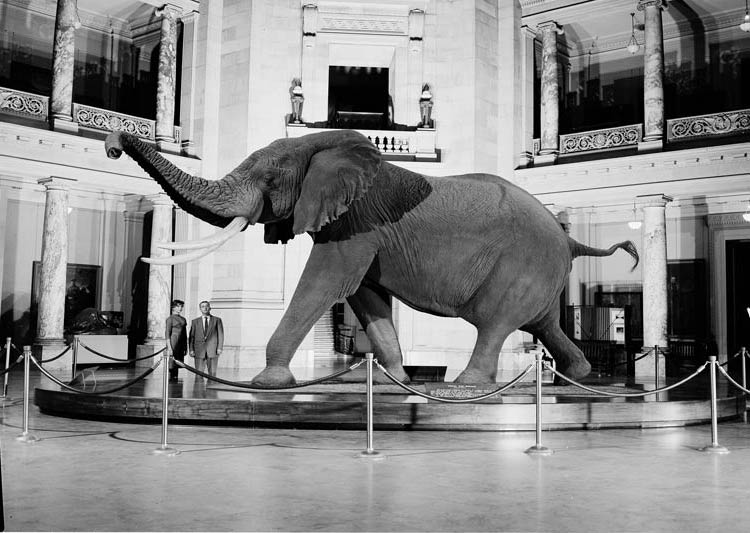
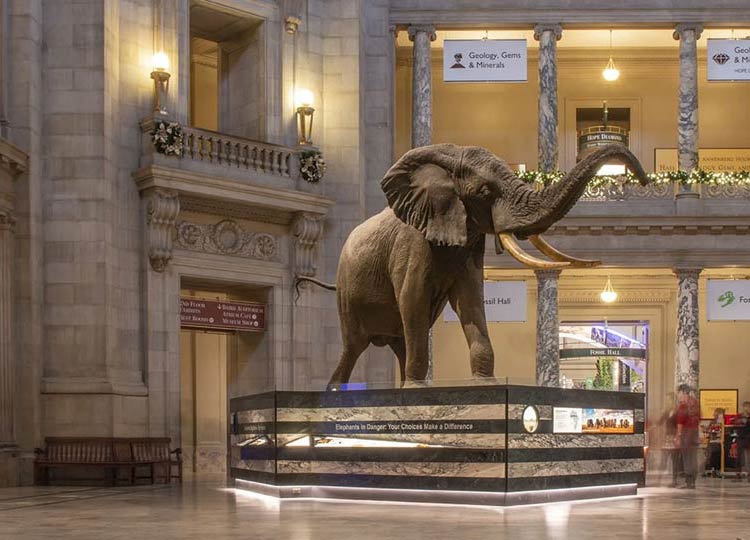
Beneath the glass dome stands an animal of dimensions that do not fit the common imagination of an elephant. This is Henry the Elephant (known in the scientific world as the Fenykövi Elephant). His height at the shoulder (withers) is 4 meters (13.1 feet). If Henry were alive today, his back would be almost as high as a single-story building. His estimated body mass while alive was around 11 metric tons (24,250 pounds). This is more than the combined mass of two adult white rhinoceroses (Ceratotherium simum).
This is neither a sculpture nor an enlarged model. We are looking at the authentic skin of an African bush elephant (Loxodonta africana), stretched over a structure that recreates the muscles, skin tension, and body proportions of a specific individual. This elephant truly existed. It walked, broke trees, and left footprints the size of manhole covers. And that is precisely why it is so impressive. This is a story of obsession, African heat, a logistical nightmare, and a shot that shook the earth.
Africa – a Land Still Capable of Birthing Colossi
To understand Henry’s story, one must step back not just to 1955, but to the world that still existed then. Southwestern Angola was an area under very low human pressure. Vast territories, the swamps of the Cuando River basin, and seasonal migration routes allowed elephants to reach ages that are a rarity today.
The largest male African elephants (Loxodonta africana) reach their maximum size only after 30–40 years of life (in Asian elephants (Elephas maximus), growth ceases earlier). This meant decades without poaching, without migration barriers, and without the loss of crucial feeding grounds. Henry was a product of just such a world – a world where natural selection favored size, not the avoidance of humans.
The local Luvale people had known him for years. They described a solitary elephant that did not join herds. His presence was betrayed not only by the size of his footprints – approximately 90 cm (35.4 inches) (more on this below) – but also by the sound. Broken trees snapped with a dry crack that carried far across the savanna.
1954: A 90 cm Footprint and a Shiver of Fear
This story begins one year before the death of the giant. In 1954, Josef J. Fenykövi, a Hungarian-born engineer and hunter residing in Madrid, was hunting rhinoceroses in the remote Cuíto River region of southeastern Angola. Fenykövi owned a ranch in this West African country (then a Portuguese colony), where he spent several months a year hunting wild animals. It was then that he stumbled upon something that defied logic.
Imprinted in the mud was a footprint so enormous that it looked like a remnant of a prehistoric animal.
“Pulling out my tape measure, I found it to be exactly 3 feet [approx. 91 cm (35.8 inches)] long – more than a foot more than the world’s record trophy. When I straightened up, I felt a shiver. I knew I was looking at the track of probably the largest animal living on the surface of the Earth,” Fenykövi wrote in an article for “Sports Illustrated” in 1956.
At the time, the hunter did not yet know that nature was playing a trick on him. He was tracking a ghost that would become his obsession. He returned to Europe to prepare an expedition whose sole purpose was to find the owner of that gigantic imprint.
1955: The Hunt for the “Ghost”
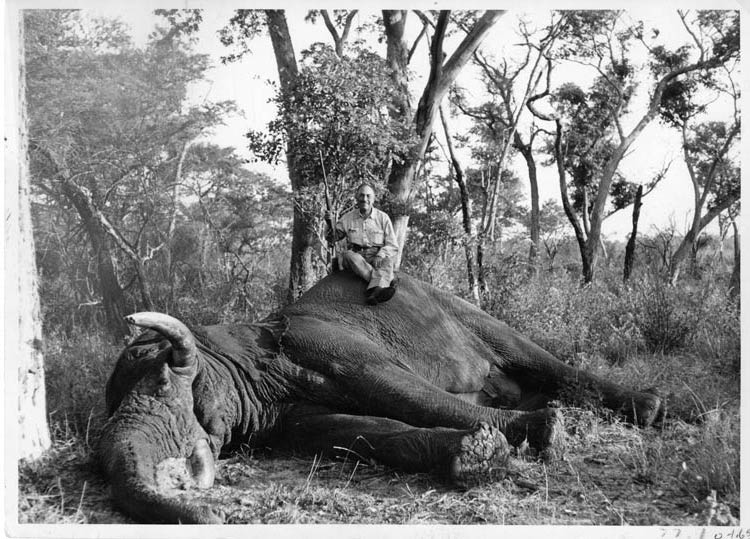
Fenykövi returned to Angola in November 1955, leading a specially organized expedition. On November 12, after days of grueling marching, the trackers once again picked up the trail. The next day, November 13, the silence of the bush by the Cuando River was broken by the cracking sound of breaking trees. A gray mountain appeared in the thicket.
The encounter lasted seconds, but it was etched into history. The elephant was alone. When he sensed the intruders, he did not flee. He turned, spread his ears as wide as a great map of Africa, and raised his trunk. Fenykövi and his team opened fire.




It was not a clean, swift death. The giant was so powerful that it took 16 large-caliber bullets to bring him down. When he finally collapsed, the earth literally shook. Fenykövi, looking at the battlefield, felt a mixture of triumph and overwhelming sorrow.
“The huge elephant lay on its side, amidst the bloody carnage, broken trees, and trampled undergrowth that marked his final struggles. […] I could scarcely believe that any animal could be so large,” he recalled.
Fénykövi’s account indicates that the guides did most of the work. They found the elephant’s tracks on foot, while Fénykövi followed by jeep, and a man named Mario delivered the shots that ultimately killed the animal.
The Mystery of the Great Footprint
It was only after the excitement subsided and the hunters approached the carcass that the mystery of the gigantic footprint from 1954 was solved. Fenykövi was not mistaken about the elephant’s size – it was indeed a record-breaking giant – but the footprint measurement was an error.
The autopsy revealed an old iron projectile from a muzzle-loaded flintlock rifle lodged in the elephant’s left front leg. The animal had carried it for years. The pain caused the elephant to limp and take shorter steps. When walking, the left hind foot landed partially on the track of the front foot, creating the illusion of a single, monstrous foot nearly one meter (3.3 feet) long.
This bullet also became the basis for the theory that the elephant was nearly 100 years old at the time of death. However, considering the biology of elephants, which at such an advanced age typically have completely worn-out teeth (making chewing and survival impossible), this is unlikely – we refer you to the article African Elephant, where this issue is explained in detail.
Despite this, the tape measure did not lie on the most important matter: the elephant measured exactly 4 meters (13.1 feet) at the shoulder (withers). He was the largest land animal ever hunted and scientifically measured.
Logistical Miracle
Salt and Rail to Madrid
Killing the giant was one thing, but saving it for the world became a logistical challenge on the scale of building pyramids. In the tropical heat, without refrigeration, time was the enemy. A team of 26 people worked non-stop to remove the skin, which weighed over 2 metric tons (4,409 pounds). The “hide” was so thick (up to 2.5 cm (1 inch) in places) that knives dulled after a few cuts.
To save the skin from rotting, an entire truckload of salt was used. The cargo, secured in this way, had to travel hundreds of kilometers through the wild wilderness to the railway station in Silva Porto (today’s Kuito). From there, it went to the port of Lobito, and then by ship to… Madrid.
It was in the Spanish capital, in Fenykövi’s workshop, that the skin spent its first months. Initially, Fenykövi offered the elephant to the London Natural History Museum, but the acquisition and transport process was too lengthy
5 Tons of Clay and the Birth of Henry
When the crates finally arrived in the USA, the team of taxidermists from the Smithsonian, led by John Goddard, faced the task of a lifetime. For 16 months, acting as both surgeons and sculptors, they recreated every muscle and every fold on the trunk.
Because the original bones weighed several tons and were too brittle for such a complex structure, a special steel framework was created. As much as 5 metric tons (11,023 pounds) of clay were used to model the giant’s body. Only then was the original skin stretched over this mannequin. The powerful, natural tusks were also preserved – weighing a total of nearly 100 kg (220 pounds).
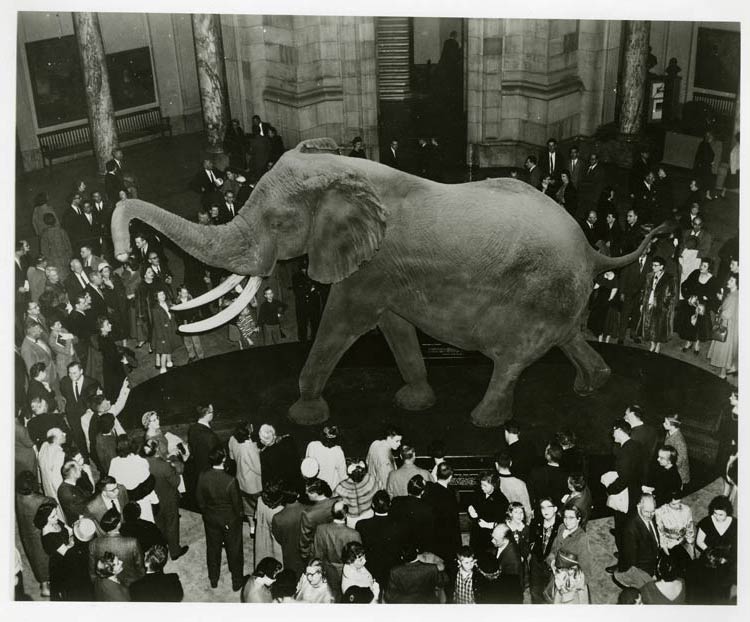
The elephant was unveiled in the museum’s main rotunda on March 13, 1959. The crowds were so large that timed tickets had to be introduced. Although officially named the “Fenykövi Elephant,” children and staff quickly nicknamed him “Henry.”
The tusks of this specimen were large, but not the longest ever recorded. The longest tusks of wild elephants date from the late 19th and early 20th centuries (up to 3 meters (9.8 feet) measured along the curve).
Was Henry the Largest Elephant?
Henry the Elephant still holds the title of the largest elephant displayed in a museum to this day, but was he the absolute largest in history? There are several contenders.
Rival Claims and Unverified Giants
- Guinness World Records mentions another Angolan elephant, shot in 1974, whose height was estimated at 3.96 m (13 ft) / some sources even claim more. The problem is that these measurements were taken in difficult field conditions, and the body was not preserved.
- Other recorded rivals include an elephant from Mozambique in 1955 and specimens from the late 19th century from Central Africa; many of these records cite a shoulder height (at the withers) of 3.7 to 4.0 meters (12.1 to 13.1 ft).
Henry’s Unique Status
Henry remains, for now, the only undeniable evidence of how large these mammals can grow. He is the scientifically measured and preserved king of his species. His height of 4.0 meters (13.1 ft) is definitively documented from the moment of his death and preservation.
Other Impressive Individuals
Nevertheless, elephants such as Satao and Tim, whose mass was estimated at about 8 metric tons (17,637 pounds), are also extremely impressive individuals, particularly known for their massive tusks or tragic stories.
- Satao (1968 – 2014) was one of the largest African elephants in Kenya. Satao was killed by poachers with a poisoned arrow on May 30, 2014.
- Tim (1970–2020) had tusks weighing 45 kg (99 lb) each. He died at the age of 50 from natural causes.
Evolution of Interpretation
From Trophy to Ambassador
For decades, the Fenykövi Elephant was a symbol of the museum, but its history as a trophy raised increasing questions. The colonial, imperialistic context and the glorification of trophy hunting itself became problematic in the 21st century. The museum struggled with the interpretation of this exhibit, which – though inspiring – was the result of a “selfish” act by a wealthy colonizer.
- First Display (1959–1999)
For 40 years, Henry stood on a simple, circular pedestal in the center of the rotunda. While gaining iconic status, moving away from the hunter’s name, the exhibit did not sufficiently distance itself from its trophy origin, which drew criticism.
- The Savannah Diorama (1999–2023)
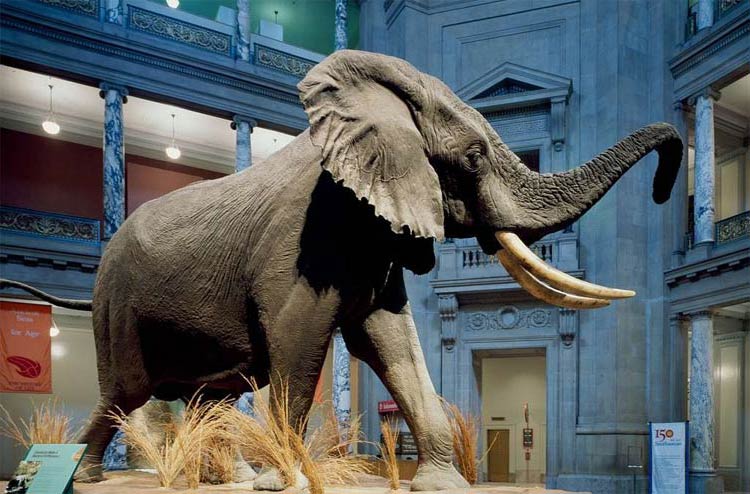
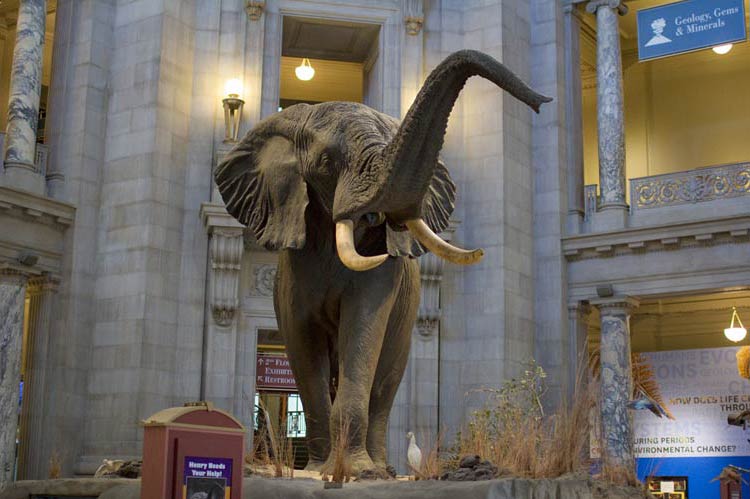
In 1999, the museum attempted to recontextualize the exhibit by raising the elephant by one meter (3.3 feet) and placing it in a large, open Angolan savanna diorama. The project, funded partly by another hunter, Kenneth Behring, elegantly connected various museum departments:
- Anthropology (a beer can tied to a tree)
- Paleobiology (bones of extinct proboscideans)
- Biodiversity (jackal, birds, insects, cast from authentic specimens)
It offered a holistic view of the natural world, with Henry as the central focal point.
- New Platform and Message (Since 2023)
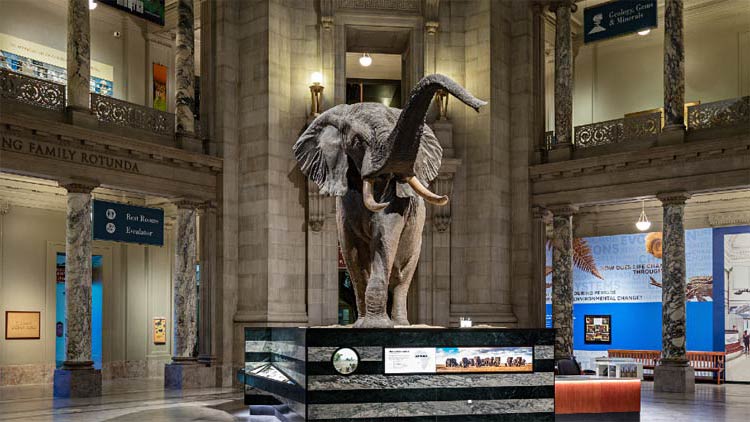
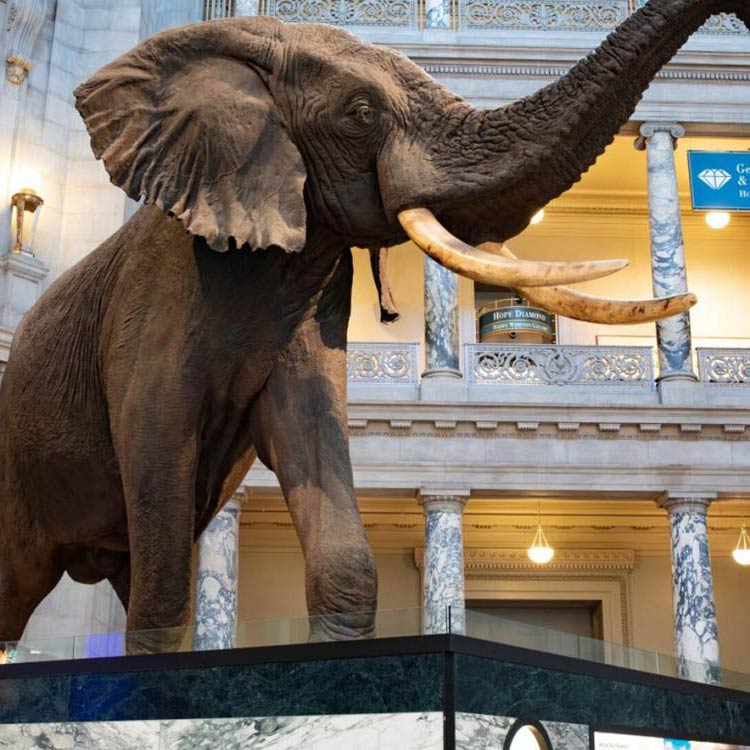
In 2023, the exhibition underwent another radical change. The savanna diorama disappeared. Henry now stands on a simple, marble platform, whose light and dark bands reflect the rotunda’s classic architecture. The compass rose on the floor, hidden since 1959, is once again visible.Crucially, almost all of the interdisciplinary interpretation has vanished. The new exhibit focuses entirely on elephant conservation and the omnipresent threat of poaching. Beside the giant, the only other exhibits are three ivory sculptures confiscated by customs services. The message is clear: an elephant is killed for its tusks every 15 minutes, and poaching has tripled since 1998.The name Fenykövi was deliberately removed from the new narrative so that Henry could function as a valued ambassador for his endangered species.
Icon and Remorse
Today, standing beneath Henry, one feels a mixture of awe and sadness. Contemporary African elephants rarely reach the age that would allow them to achieve such dimensions. Poaching and habitat loss have caused the genes for gigantism to disappear.
In 2023, moving with the times, the museum added a new plaque next to the old exhibit. It no longer glorifies the hunt but prompts reflection:
“This elephant was the largest known representative of its species. His death in 1955 reminds us that true greatness does not need trophies.”
Henry still stands there. Silent, motionless, undefeated by time. The largest elephant that ever looked a human in the eye. And although he lost that bloody duel in 1955, he won something far more important – immortality.
Recommended