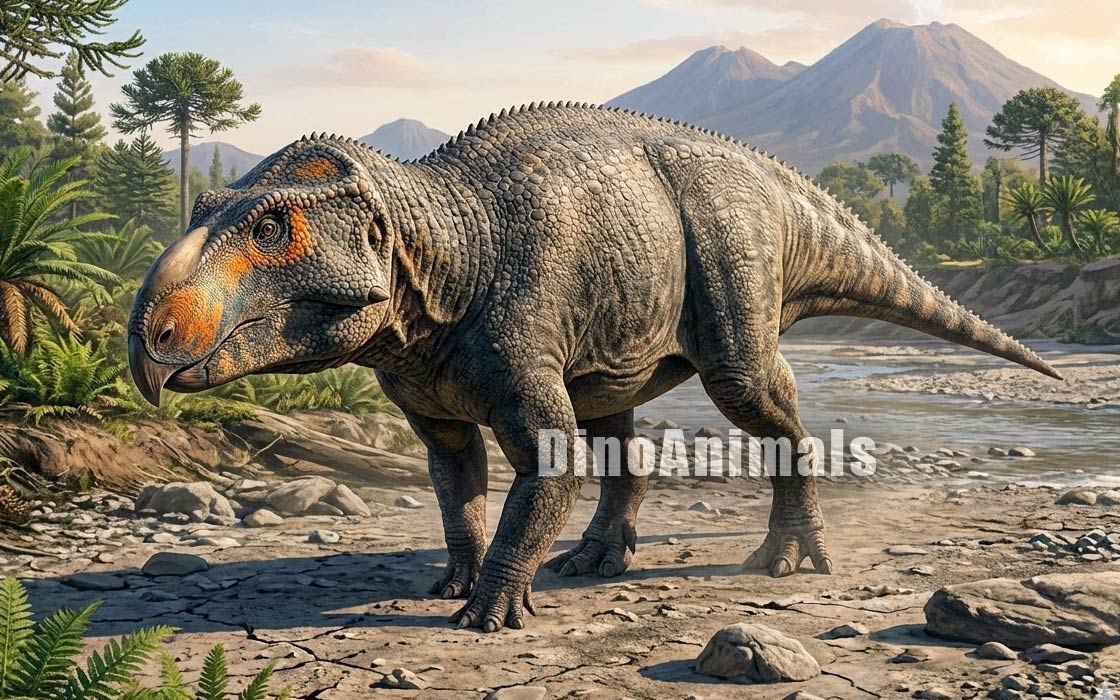
Dinosaur: Ferenceratops shqiperorum
| Length*: | 3 m | 9.8 ft |
| Weight*: | 200 kg | 441 lb |
*The largest known specimen
Period
Epoch: Late Cretaceous
Stage: Maastrichtian
Years: 72.1–66 Ma
Details
Status: valid
Author: Maidment et al.
Year: 2026
Distribution
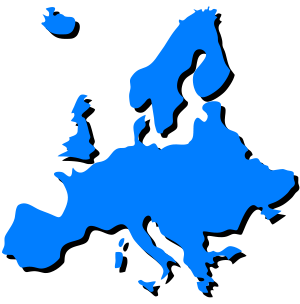
Area: Europe
Country: Romania
Region: Transylvania
Formation: Sânpetru
Description
Ferenceratops shqiperorum
Ferenceratops shqiperorum is a ceratopsian dinosaur from the Late Cretaceous (Maastrichtian) Sinpetru Formation of the Hațeg Basin, Romania. Known from a partial holotype skeleton and referred material, it was previously classified as the ornithopod Zalmoxes shqiperorum but reidentified in 2026 as a ceratopsian, revealing hidden diversity of horned dinosaurs in Europe. This taxon exemplifies island dwarfism and convergent evolution with iguanodontians, contributing to reevaluations of Late Cretaceous European faunas and ornithischian phylogeny.
Etymology
The generic name Ferenceratops honors Ferenc, the birth name of Franz Nopcsa, an influential early 20th-century paleontologist who studied Hațeg Basin dinosaurs, combined with Greek “keras” (horn) and “ops” (face). The specific epithet shqiperorum refers to Shqipëria (Albanian for Albania), reflecting Nopcsa’s Albanian heritage and interests.
Physical Characteristics
- Skull: Not preserved in holotype, but referred predentary and dentary teeth suggest ceratopsian affinities with convergent morphology to iguanodontians.
- Vertebral column: Partial dorsal vertebra.
- Pectoral girdle: Left scapula with narrow, strap-like blade and distal expansion; well-developed, upwardly concave acromial process; partial left coracoid with extremely elongate, slender sternal process projecting below glenoid ventral margin.
- Pelvic girdle: Ilium fragment; right ischium and left distal ischium gently curved, lacking obturator process.
- Hindlimb: Left femur.
No direct size measurements are available, but as a Hațeg Island dwarf ceratopsian, Ferenceratops is estimated at 2–3 m (7–10 ft) length and 100–200 kg (220–440 lb) mass, based on comparisons to previous Zalmoxes estimates and ceratopsian scaling (ESR 3/4).
Diet and Feeding Habits
Herbivore; convergent dental and jaw features with iguanodontians suggest complex chewing for processing vegetation; co-occurrence with ornithopods indicates shared niches, possibly on tough plants like ferns or conifers.
Habitat and Distribution
Europe, Romania, Hunedoara County, Sinpetru (Sânpetru) Formation (Hațeg Basin).
Paleoenvironment
Fluvial deposits in island archipelago with insular dwarfism; humid subtropical climate; co-occurring taxa include rhabdodontids (now partially ceratopsians), titanosaurs, ornithopods, theropods, crocodylomorphs, turtles.
Behavior and Social Structure
Inferred from clade: quadrupedal browser; possible herding based on ceratopsian analogs; no direct evidence.
Discovery and Research
Holotype NHMUK PV R 4900 discovered pre-1915 by Franz Nopcsa in Sibişel Valley; originally Rhabdodon priscum, then Zalmoxes shqiperorum in 2003; redescribed as Ferenceratops in 2026. Referred UBB SPZ-2 (articulated pelvis). Phylogenetic analyses recover it as ceratopsian in clade with ceratopsids, Turanoceratops, Zuniceratops; challenges rhabdodontid paradigm, reveals European ceratopsian diversity.
Discovery Context
Excavated from Maastrichtian fluvial sediments; µCT scanned for morphology; dated by stratigraphic correlation.
Significance and Interesting Facts
- Reveals hidden ceratopsian diversity in Europe, resolving biogeographic puzzle.
- Some ‘rhabdodontids’ are ceratopsians due to convergence.
- Exemplifies island dwarfism and relictualism in European archipelago.
- Co-occurrence with iguanodontians mirrors Laurasian ecosystems.
- Honors Nopcsa; prompts re-evaluation of European ornithischians.
- No elaborate frills/horns, unlike North American/Asian relatives.
Conclusion
Ferenceratops shqiperorum transforms understanding of Late Cretaceous European dinosaurs, confirming ceratopsian presence and reclassifying some rhabdodontids as horned dinosaurs. Its partial skeleton from the Hațeg Island reveals convergent evolution with iguanodontians and insular effects, indicating greater faunal similarity to Laurasia. This 2026 discovery demands taxonomic revisions and highlights dispersal routes, enriching ornithischian phylogeny and paleobiogeography.
Locations
Sources
Material: Partial right dentary, partial dorsal vertebra, left scapula, partial left coracoid, ilium fragment, right ischium, left distal ischium, left femur (holotype NHMUK PV R 4900); articulated pelvis (referred UBB SPZ-2)
References: Maidment S.C.R., Butler R.J., Brusatte S.L., Meade L.E., Augustin F.J., Csiki-Sava Z., Ősi A. 2026. A hidden diversity of ceratopsian dinosaurs in Late Cretaceous Europe.